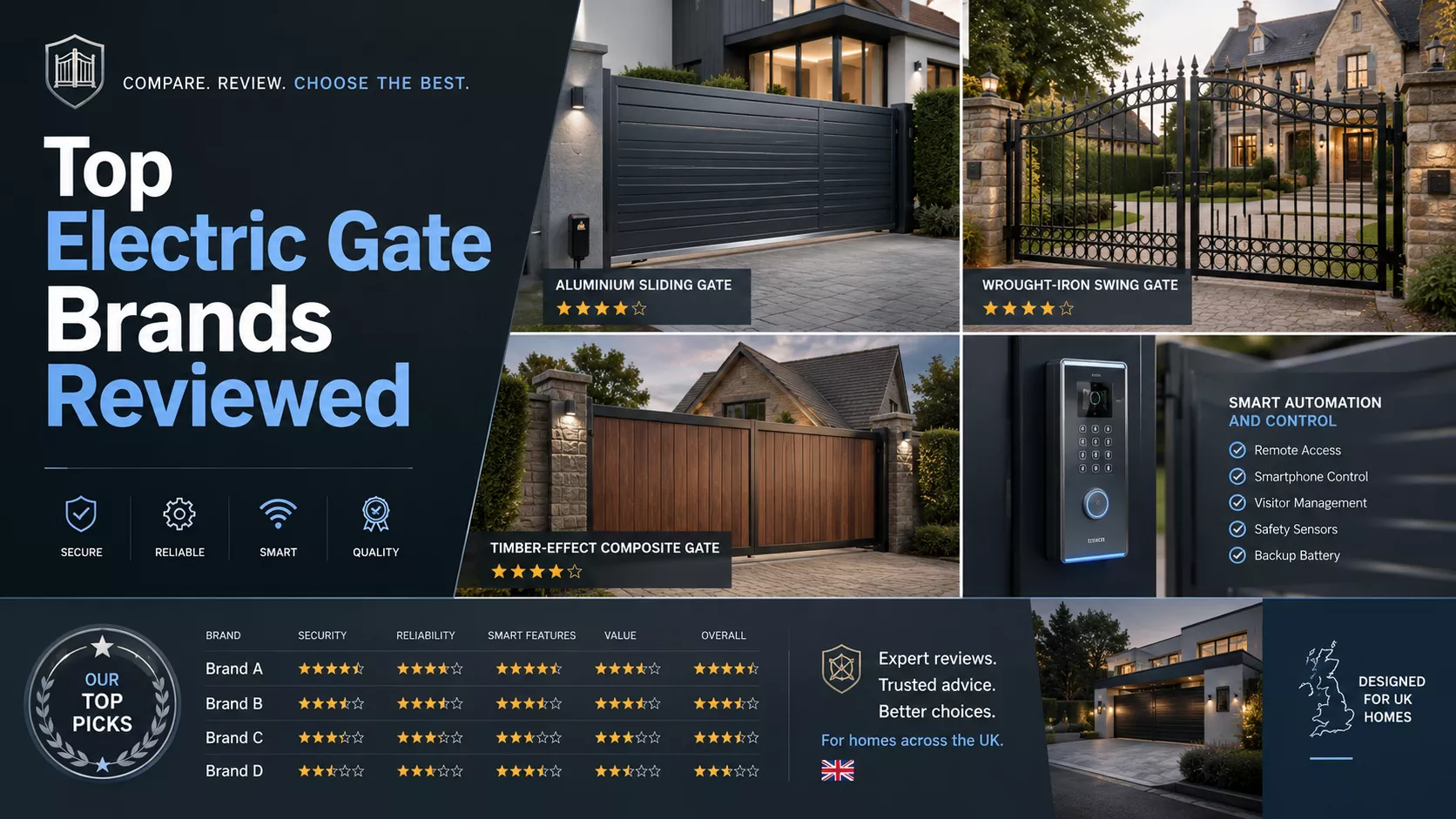
Choosing between wooden and metal electric gates is an important decision because the material affects security, durability, maintenance, motor performance, weather resistance, and overall appearance. The right gate material should suit the property type, local environment, budget, and long-term access needs.
Material choice matters because each option has different strengths. Steel offers high strength and strong impact resistance, making it suitable for commercial premises and high-security sites. Aluminium is lighter, corrosion-resistant, and easier on gate motors, which makes it a practical choice for many homes. Wrought iron provides a traditional and robust appearance but needs regular rust protection. Timber gives a warm and natural look, but it requires more upkeep and is more exposed to weather damage than metal.
Wooden electric gates are often chosen for their natural style, privacy, and kerb appeal. They work well for residential properties, countryside homes, and high-end developments where the gate must blend with the surrounding architecture. Solid-boarded timber gates help block outside views and create a private entrance. They can also be automated with remote controls, intercoms, keypads, or smartphone systems. Hardwood options such as Iroko, Oak, and Accoya offer better durability, while softwoods such as Cedar or Redwood are more affordable but need more maintenance.
Metal electric gates focus more on strength, security, and long service life. Steel and wrought iron gates form a strong physical barrier and are harder to damage or force open. Aluminium gates are lighter and resist corrosion well, especially in coastal areas. Metal gates can suit both modern and traditional properties, with options such as laser-cut steel, decorative wrought iron, and minimalist aluminium panels. They also work well with swing and sliding automation systems because of their stable structure.
In terms of durability and lifespan, metal gates usually outperform wooden gates. Wooden electric gates can last around 10 to 20 years, depending on the timber type and maintenance routine. Metal gates can last 20 to 50 years or more when protected with galvanising, powder coating, or anti-rust treatments. Wood is more likely to suffer from rot, warping, cracking, UV damage, and insect attack. Metal is more resistant to pests and weather, although steel still needs rust checks and aluminium may dent under strong impact.
Weather resistance is another major difference. Wooden gates need regular sealing, staining, or painting to handle rain, sunlight, humidity, and seasonal changes. They may also catch more wind if built with solid panels, placing extra strain on motors. Metal gates perform better in harsh conditions, especially when galvanised or powder-coated. They resist moisture, pests, and wind more effectively, making them a stronger option for exposed, coastal, industrial, or high-traffic environments.
Table of Contents
Why Material Choice Matters for Electric Gates?
Material selection for electric gates directly affects performance, safety, and lifespan. Each material brings unique properties in strength, corrosion resistance, cost, and visual design. These material traits influence installation environment compatibility, from coastal homes to industrial zones.
Steel provides maximum strength and impact resistance, making it ideal for high-security properties. However, untreated steel is vulnerable to rust unless galvanised or powder-coated. Aluminium gates resist corrosion, require minimal maintenance, and are lighter, which puts less strain on motors, ideal for residential settings. Wrought iron delivers traditional aesthetics and robustness but needs regular anti-rust treatments. Timber offers warm visuals but demands seasonal upkeep and is less secure than metal options.
Weather resistance, especially in humid or saline environments, makes material compatibility crucial. For example, aluminium gates with marine-grade coatings outperform steel in coastal areas. In contrast, steel suits industrial premises due to its rigidity.
Energy efficiency, motor wear, and access control responsiveness are indirectly influenced by gate weight and structural integrity, both dictated by material type. An informed material choice enhances electric gate performance while aligning with security, maintenance, and aesthetic priorities.
Overview of Wooden Electric Gates
Wooden electric gates combine automation with the natural aesthetics of timber, offering privacy, security, and curb appeal. They are widely used in residential properties, countryside homes, and high-end developments where visual harmony matters.
Benefits include:
Security: Wooden electric gates act as a physical barrier. They can be integrated with intercoms, access keypads, or GSM openers for controlled entry.
Privacy: Solid-boarded wooden gates prevent visibility into the property, ensuring discretion and seclusion.
Convenience: Automation via remote control or smartphone app enables smooth, hands-free operation.
Curb Appeal: A well-designed hardwood gate complements the surrounding architecture, increasing visual value.
Property Value: Estate agents often list electric gates as a premium feature due to their aesthetic and security appeal.
Types of gates:
Swing gates: Open inward or outward, often used where space allows.
Sliding gates: Ideal for sloped or compact driveways, sliding along a track to save space.
Material considerations:
Hardwoods like Iroko, Oak, and Accoya offer durability.
Softwoods like Cedar or Redwood are budget-friendly but need more upkeep.
Wind loading must be assessed to avoid strain on motors or damage.
Overview of Metal Electric Gates
Metal electric gates provide high-security access control with strong structural integrity. Their robust composition offers durability, impact resistance, and minimal maintenance compared to timber alternatives. They suit both residential and commercial environments.
Key advantages include:
Security: Steel and wrought iron gates create a rigid physical barrier. Their resistance to tampering makes them ideal for properties needing heightened protection.
Durability: Powder-coated or galvanised finishes protect against corrosion, extending lifespan even in coastal or industrial areas.
Low Maintenance: Unlike wood, metal doesn’t warp, crack, or rot. Regular cleaning and occasional repainting preserve appearance and performance.
Design Variety: Laser-cut steel, decorative wrought iron, or minimalist aluminium gates suit both modern and traditional architecture.
Automation Compatibility: Due to their structural stability, metal gates operate smoothly with both swing and sliding automation systems.
Common types:
Steel gates: Heavy, secure, and highly durable, suitable for high-risk zones.
Aluminium gates: Lightweight, corrosion-resistant, and ideal for coastal homes.
Wrought iron gates: Offer classic aesthetics with high strength, often used in heritage properties.
Wind resistance, gate weight, and ground conditions should guide the automation system selection.
Durability & Longevity Comparison
Material durability directly affects electric gate reliability, upkeep costs, and long-term value. Metal gates generally outperform wooden gates in structural integrity and resistance to environmental wear. Below is a side-by-side comparison:
Feature | Wooden Electric Gates | Metal Electric Gates |
Lifespan | 10–20 years (depending on wood type & care) | 20–50+ years (with protective coatings) |
Maintenance Requirements | High – regular staining, sealing, or painting | Low – occasional cleaning, anti-rust treatment for steel |
Weather Resistance | Moderate – prone to rot, warping, and cracking | High – especially aluminium and galvanised steel |
Pest Resistance | Low – vulnerable to termites and woodworm | High – not susceptible to pests |
Structural Strength | Moderate – can be reinforced | High – excellent impact resistance |
Visual Appeal | High – suits traditional or rustic settings | Medium – versatile but less natural-looking |
Common Risks | Decay, insect damage, UV degradation | Rust (steel), dents (aluminium) |
Metal gates provide superior durability and lower maintenance overhead, making them ideal for exposed or high-traffic settings.
Weather & Environmental Resistance
Weather and environmental exposure directly affect electric gate durability, functionality, and required maintenance. Wood and metal react differently to moisture, temperature fluctuations, wind, and pests.
Wooden Electric Gates
Attribute | Detail |
Weather Resistance | Vulnerable to rot, warping, and cracking in humid or coastal areas |
UV Protection | Prone to sun bleaching and surface degradation without UV-resistant coatings |
Pest Exposure | Susceptible to termites and wood-boring insects unless pressure-treated |
Wind Resistance | Solid panels can trap wind, requiring stronger motors or alternative designs |
Maintenance | Needs regular staining, sealing, or painting to prevent decay |
Sustainable hardwoods like Accoya offer improved durability and eco-friendly sourcing, but still require consistent maintenance in wet climates.
Metal Electric Gates
Attribute | Detail |
Weather Resistance | Excellent with galvanised steel or powder-coated aluminium |
Corrosion Resistance | High if pre-treated; essential in coastal or industrial environments |
Pest Resistance | Immune to insect infestation |
Wind Resistance | Generally stronger; aluminium gates may bend in extreme winds |
Maintenance | Low; occasional cleaning and periodic rust checks for steel variants |
Metal gates outperform wood in harsh conditions, especially where moisture or wind load is a concern.