Installing electric gates can improve property security, privacy, access control and overall risk management. They create a strong physical barrier that makes unauthorised entry more difficult while also discouraging opportunistic intruders. Features such as automatic locking, keypads, remote controls, intercoms and safety sensors give property owners greater control over who enters and help reduce the risk of accidents.
Electric gates can also integrate with CCTV, ANPR, video intercoms and visitor logging systems, creating a layered security setup. This allows homeowners and businesses to monitor visitors, record access events and respond more quickly to suspicious activity. Solid gate designs can also improve privacy by limiting visibility from the street and preventing unwanted visitors from approaching the property directly.
From an insurance perspective, stronger perimeter security may help reduce the risk of burglary, theft, vandalism and unauthorised access. Some insurers may consider these security improvements when assessing a property’s risk profile or potential premium discounts. However, any insurance benefit depends on the insurer, policy conditions and whether required security standards are maintained.
Electric gates may also support legal and liability protection by demonstrating proactive safety measures, especially when sensors, controlled access and surveillance are in place. For commercial properties, they can form part of broader security-compliance requirements. Overall, electric gates offer a valuable combination of security, privacy, convenience, liability reduction and potential insurance advantages.
Table of Contents
- 1. Why Electric Gates Improve Property Security?
- 2. Key Security Features That Offer Protection
- 3. How Electric Gates Help Reduce Insurance Premiums?
- 4. Insurance Company Security Requirements
- 5. Legal & Liability Protection Benefits
- 6. Integration with Access Control & Surveillance
- 7. Privacy Benefits of Electric Gates
- 8. Electric Gates as a Property Value Enhancer
- 9. Commercial Property Insurance & Security Compliance
- 10. Frequently Asked Questions
Why Electric Gates Improve Property Security?
Electric gates are a powerful asset when it comes to enhancing property security, providing numerous benefits to homeowners and businesses alike. First and foremost, they act as a strong physical barrier, making it difficult for unauthorised individuals to gain access to the property. With advanced locking systems, they are far more secure than traditional manual gates, preventing easy tampering or forced entry.
The mere presence of an electric gate can also serve as a significant deterrent to opportunistic criminals. Intruders are less likely to attempt access if they know the property is protected by an automated security system. Moreover, electric gates often feature controlled entry mechanisms, such as remote controls or keypads, ensuring that only authorised individuals can enter, while preventing any unwanted visitors.
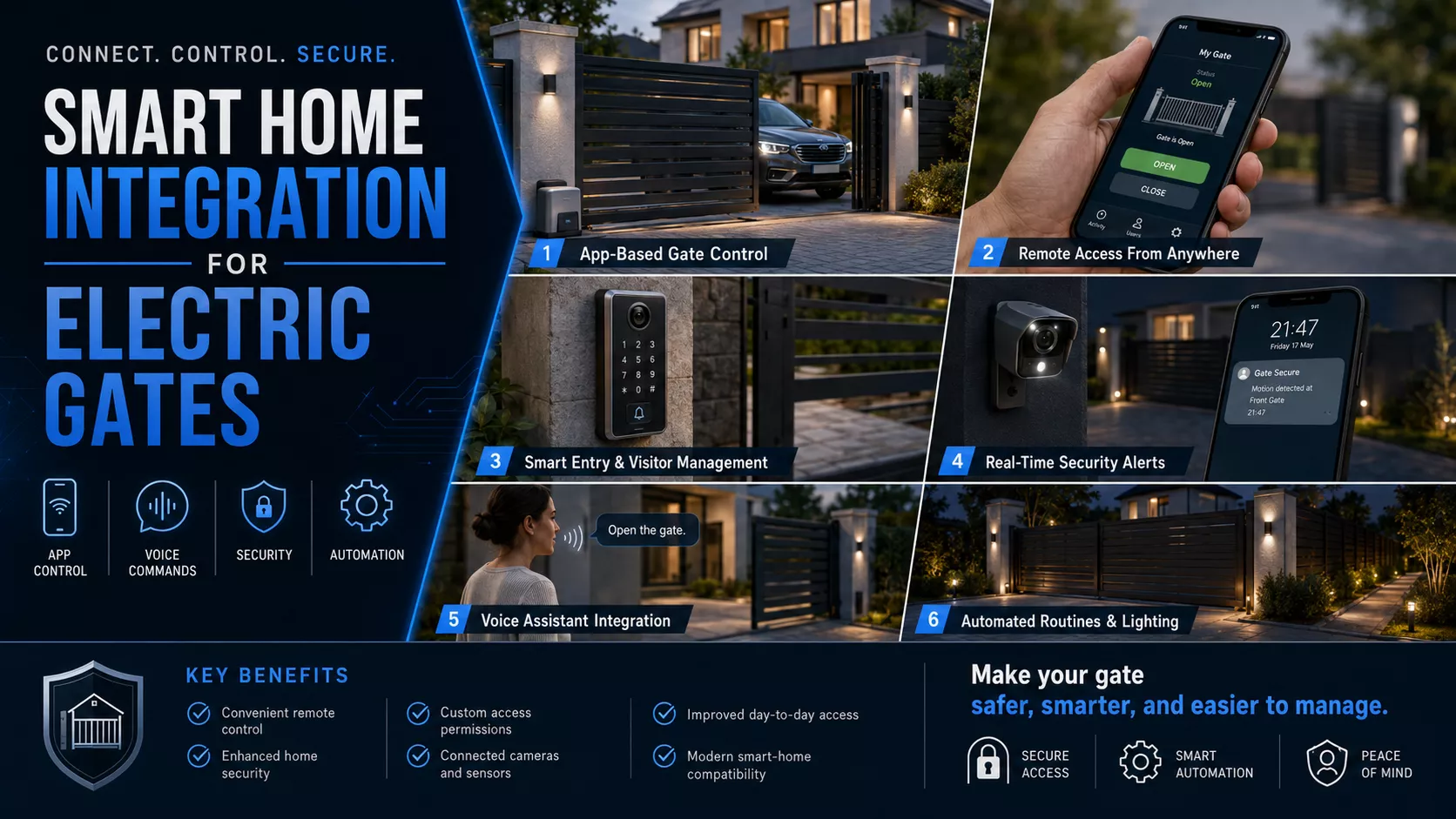
Additionally, electric gates can be integrated with other security systems, such as CCTV cameras and intercoms, to provide real-time surveillance and communication with anyone attempting to enter. This integration adds an extra layer of security, allowing homeowners to monitor visitors remotely before granting access.
Furthermore, electric gates improve privacy by blocking visibility, preventing prying eyes from seeing into the property. They also reduce the likelihood of intruders being able to quickly flee the scene, giving you more time to alert authorities in case of an emergency.
Key Security Features That Offer Protection
Electric gates come with advanced security features that significantly enhance property protection. Here are some of the key elements that make electric gates a vital investment for safeguarding your home:
1. Automatic Locking Mechanisms:
Prevents unauthorized entry by securing the gate automatically when closed.
These systems ensure the gate remains locked without the need for manual intervention, offering reliable protection against forced entry.
2. Safety Sensors:
Detects obstacles and prevents gate closure if something is in the way.
These sensors help avoid damage to vehicles or individuals while also ensuring the gate won’t close on someone attempting to bypass it.
3. Controlled Visitor Access:
Manages who can enter the property using keypads, intercoms, or remote controls.
With features like intercom systems and remote access, you can easily verify visitors and control who is allowed entry, preventing unauthorised access.
4. 24/7 Monitoring Integrations:
Connects to CCTV or security systems for continuous surveillance.
Integrating electric gates with 24/7 monitoring systems allows you to track and respond to potential threats at all times, providing peace of mind when you’re away.
These key features work together to provide enhanced protection and greater control over access to your property.
How Electric Gates Help Reduce Insurance Premiums?
Electric gates can play a significant role in lowering insurance premiums by enhancing security and reducing the risk of damage or theft. Here’s how they help:
Lower Burglary Risk = Lower Insurance Risk Profile:
The presence of electric gates acts as a strong deterrent to criminals. By reducing the likelihood of a break-in or vandalism, your property is seen as a lower risk, which insurers consider when calculating premiums.
Potential Insurance Discounts (Home & Business Policies):
Insurance providers often offer discounts for properties with added security features. By installing electric gates, you show insurers that you’re proactively protecting your property, potentially qualifying for discounts on both home and business insurance policies.
Security Upgrades That Appeal to Insurers:
Electric gates provide advanced security, such as automated locking and controlled access, which is valued by insurers. These measures reduce the likelihood of claims related to theft, property damage, or liability, making your property a less risky investment for the insurer.
In summary, by improving the security of your property, electric gates can directly reduce the risk profile, leading to lower insurance premiums and potential discounts.
Insurance Company Security Requirements
Insurance companies typically impose specific security standards to mitigate risks and ensure claims are valid. These requirements can vary depending on the policy, but they generally cover both physical and digital security measures.
1. Physical Security Standards:
Insurers often require properties to meet certain physical security criteria, such as:
Locks and Entry Points: Secure locking systems, such as mortice deadlocks or multi-point locks for external doors, are commonly required.
Alarm Systems: The installation of certified alarm systems that are regularly tested and maintained is another common stipulation.
CCTV and Gates: For higher-value properties, insurers may demand visual surveillance or automatic security gates to control access.
2. Cybersecurity Requirements (for businesses with digital assets):
Risk Assessments: Insurers may require regular risk assessments to identify vulnerabilities in data security.
Security Controls: The use of firewalls, encryption, and multi-factor authentication (MFA) is often necessary to protect against data breaches.
Incident Response Plans: Businesses must have a clear plan for responding to breaches or cyber-attacks.
3. Impact of Non-Compliance:
Failing to meet these security requirements can have serious consequences. In some cases, insurers may reduce or deny claims, particularly if the lack of compliance directly contributed to the loss or damage. Ensuring your property meets these standards is essential for securing full insurance coverage.
Legal & Liability Protection Benefits
Electric gates offer more than just physical security – they support legal compliance and reduce liability risks for property owners. Their role in mitigating accidents and unauthorised access can directly influence legal outcomes in the event of claims.
1. Fulfilling Legal Duties as a Property Owner
Owners have a duty of care to maintain a safe environment. Installing electric gates with safety sensors and access controls helps demonstrate proactive risk management – an important factor in legal defence if an incident occurs.
2. Lowering the Risk of Injury Claims
Electric gates establish a controlled boundary. This minimises the chance of injuries to trespassers or uninvited visitors, reducing the likelihood of public liability claims. Features like obstacle detection and automatic closure help prevent accidents involving gates themselves.
3. Protecting Vulnerable Individuals
Automated gates can keep children, pets, and vulnerable adults safely contained within a property. This lowers the chance of external harm or escape-related incidents, helping avoid legal repercussions linked to neglect or exposure to danger.
4. Enhanced Legal Position in Disputes
Documented access logs, CCTV integration, and compliance with security standards can strengthen your legal position in liability disputes – particularly in injury, trespass, or negligence cases.
Overall, electric gates contribute to a safer legal environment and can significantly reduce exposure to liability.
Integration with Access Control & Surveillance
Electric gates can integrate seamlessly with advanced access control and surveillance systems, creating a multi-layered security infrastructure that enhances visibility, deterrence, and control.
Feature | Functionality |
CCTV Synchronisation | CCTV cameras capture and log gate events in real time, providing visual evidence. |
ANPR (Automatic Number Plate Recognition) | Identifies and logs vehicle plates, allowing automatic gate access for approved vehicles. |
Video Intercom Systems | Allows two-way communication with visitors before granting entry via the gate. |
Visitor Logging | Stores access history by time, identity, or registration number for future review. |
Real-Time Monitoring | Operators can view footage with access data overlays, improving situational awareness. |
Automated Event Responses | The system can trigger alerts, lock gates, or activate recording if threats are detected. |
This integration provides intelligent surveillance, where access control events (like a denied entry) automatically trigger corresponding camera actions. This convergence of systems not only reduces human error but also strengthens investigations by correlating footage with access logs.
Whether for a private residence or a commercial site, integrated electric gates act as a central barrier while enhancing the performance of surveillance ecosystems – offering tighter control and higher accountability.
Privacy Benefits of Electric Gates
Electric gates offer significant privacy advantages for homeowners by providing enhanced control over access and visibility. Here’s how they help protect your personal space:
1. Screening Visitors Before Entry:
Electric gates allow you to verify visitors before granting access, using features like video intercoms or remote control systems. This ensures that you can manage who enters your property, providing an added layer of privacy.
2. Reducing Unwanted Solicitors:
By restricting access to your property, electric gates discourage unwanted door-to-door salespeople or solicitors from approaching your home. This creates a more peaceful environment without interruptions.
3. Enhanced Peace of Mind for Families:
Electric gates offer security for families, particularly those with children or pets. The gates keep them safe within the property while preventing outsiders from wandering in. This also reduces the chances of children or pets unintentionally running into busy streets.
4. Noise and Visibility Reduction:
The gates act as a barrier, not only blocking views from the street but also reducing noise from nearby roads or neighbours, making your home a more peaceful and private space.
By offering both physical and psychological boundaries, electric gates create a more secluded environment, ideal for those who value their privacy.
Electric Gates as a Property Value Enhancer
Electric gates can significantly elevate the value of a property by combining functionality, security, and aesthetics. Here’s how:
Desirable Feature for Buyers: Electric gates are increasingly sought after by buyers who prioritise security and privacy. A secure, automated entry system not only adds prestige but also assures potential buyers of the property’s safety and exclusivity.
Increased Curb Appeal: A well-designed electric gate makes a powerful first impression, contributing to the overall curb appeal of the property. Whether it’s a sleek modern design or a traditional wrought iron gate, the visual appeal enhances the property’s exterior and makes it stand out in the market.
Luxury Property Marketing Advantages: For high-end homes, electric gates signal sophistication and luxury. They help position the property as an upscale offering, appealing to buyers looking for premium features that align with their lifestyle. This can result in higher offers and faster sales, as properties with electric gates are often seen as more secure and well-maintained.
In summary, installing electric gates not only boosts security but also adds value through enhanced aesthetics, convenience, and exclusivity. Whether for residential or luxury properties, they are a strategic investment that pays off in both immediate appeal and long-term value.
Commercial Property Insurance & Security Compliance
To ensure commercial property insurance remains valid and cost-effective, businesses must adhere to specific security compliance standards. These requirements help reduce risk and demonstrate a commitment to property protection.
1. Business Premises Compliance:
Commercial properties must meet rigorous security standards, including:
Locks: High-standard locks (e.g., BS3621 or BS3681) on all access points like doors, windows, and skylights.
Alarm Systems: A functional alarm system graded for reliability, often required by insurers to reduce risks.
Physical Security: Securing all potential entry points, including roof access and windows, to prevent unauthorized access.
2. Lower Premiums for High-Security Perimeters: Implementing strong security measures can lead to lower insurance premiums. Insurers offer discounts for properties that demonstrate reduced risks, such as those with high-quality locks, CCTV surveillance, and secure access control systems.
3. Insurance Inspections & Documentation: Regular inspections are necessary to ensure compliance with insurance policy requirements. Businesses may need to submit documentation, such as proof of security features, during policy renewals or after an incident.
By prioritising security compliance, businesses can protect their assets, lower insurance costs, and ensure policy validity, reducing the likelihood of claims related to theft, vandalism, or property damage.
Frequently Asked Questions
Insurance provides financial protection against risks like damage, loss, or liability, offering peace of mind and support during unforeseen events.
Security in insurance refers to the measures and protections that insurers implement to safeguard policyholder assets, such as risk assessment, fraud prevention, and financial stability.
The four types of security are physical, personnel, information, and operational security, each aimed at protecting people, assets, and information.
Insurance is vital for managing financial risks, ensuring protection against unforeseen events, and providing support in case of loss or damage.
The most important part of insurance is risk coverage, which helps policyholders recover from potential losses or damages, ensuring financial stability.