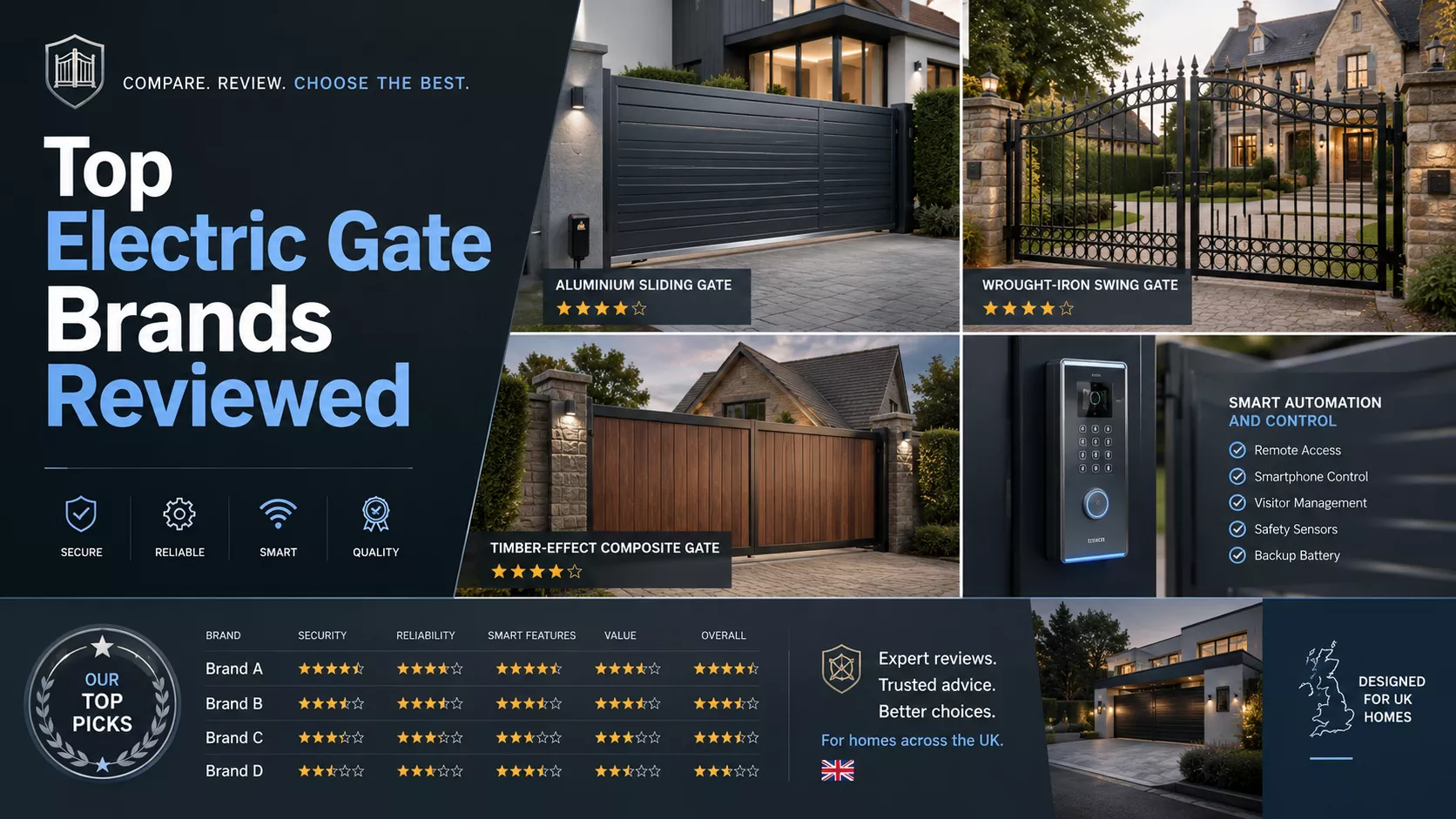
Choosing between swing and sliding electric gates is an important decision because each gate type affects security, space use, installation cost, daily operation, and long-term maintenance. The right option depends on the property layout, driveway size, ground condition, access needs, and design preference.
Swing electric gates are a popular choice for residential driveways with flat ground and enough opening space. They work on hinges and open in an arc, either inward or outward. Their simple mechanism makes them more affordable to install than sliding gates. They also offer a classic and elegant look, which suits traditional homes, rural properties, and larger entrances. However, they need clear space to open fully and may not perform well on sloped or tight driveways.
Sliding electric gates move sideways along a track or cantilever system. They are best suited to narrow entrances, sloped driveways, compact spaces, and properties that need higher security. Their lateral movement saves front and rear driveway space, making them practical for urban homes and commercial sites. Sliding gates are usually more expensive to install because they need tracks, rollers, concrete bases, and stronger motors, but they can offer better long-term value in high-use or high-security settings.
Space is one of the biggest differences between the two systems. Swing gates need a wide arc-shaped clearance zone, while sliding gates need straight side space along the boundary. Ground conditions also matter. Swing gates work best on level surfaces, while sliding gates can handle gradients better if the track or cantilever base is properly installed.
Cost is another key factor. Swing gates usually have lower upfront costs due to simpler parts and easier installation. Sliding gates cost more because they need more groundwork, stronger automation, and precise alignment. Maintenance also differs. Swing gates need hinge checks, actuator servicing, and rust protection. Sliding gates need regular track cleaning, roller checks, and motor inspection to prevent faults.
Motor choice depends on gate size, weight, material, usage level, and weather exposure. Swing gates may use above-ground ram motors or concealed underground motors. Sliding gates often use rack-and-pinion or cantilever motor systems designed for heavier and more frequent use.
In terms of security, sliding gates usually offer stronger protection. Their track-based movement, tight alignment, heavy-duty motors, and locking systems make them harder to force open. Swing gates can still be secure with electric locks, drop bolts, and access control, but they may need extra reinforcement.
Design flexibility is strong for both types. Swing gates suit classic, decorative, and formal styles, while sliding gates suit modern, sleek, and space-saving designs. The weather also plays a role. Swing gates are more affected by wind, especially solid-panel designs, while sliding gates handle wind better but need protection from debris, ice, and poor drainage.
Table of Contents
- 1. Why Choosing the Right Gate Type Matters?
- 2. What Are Swing Electric Gates and How Do They Work?
- 3. How Do Sliding Electric Gates Operate and Where Are They Best Used?
- 4. What Are the Space Requirements for Swing vs Sliding Gates?
- 5. How Do Ground Conditions Affect Gate Installation Complexity?
- 6. Which Type of Electric Gate Is More Cost-Effective?
- 7. What Maintenance and Repairs Are Needed for Swing and Sliding Gates?
- 8. What Power and Motor Options Are Available for Electric Gates?
- 9. Which Electric Gate Type Offers Better Security?
- 10. How Flexible Are Electric Gates in Terms of Design and Aesthetics?
- 11. Which Type of Gate Suits Different Property Types Best?
- 12. How Does Weather or Climate Impact Gate Performance?
- 13. What Are the Main Differences Between Swing and Sliding Gates at a Glance?
- 14. Frequently Asked Questions
Why Choosing the Right Gate Type Matters?
Choosing the correct electric gate type directly affects security performance, space utilisation, installation cost, and operational efficiency. The gate system must suit the property’s layout, usage patterns, and terrain to function safely and efficiently.
Swing gates open on hinges and are ideal for driveways with sufficient clearance. They are more affordable to install due to simpler mechanics and fewer moving components. These gates typically suit flat, wide entrances and offer a classic visual appeal for residential environments. They require inward or outward swing space, which may not be ideal in tight areas.
Sliding gates open laterally and are guided by tracks or cantilever systems. They are better for limited space, narrow driveways, or sloped ground, where swing movement isn’t feasible. Sliding gates support enhanced access control and high-security automation features like anti-lift devices and integrated smart locking systems.
Comparison Table
Feature | Swing Gates | Sliding Gates |
Installation Cost | Lower | Higher due to track/motor systems |
Space Requirements | Needs clear arc space | Ideal for tight or sloped spaces |
Security Level | Moderate | High with advanced locking |
Best Application | Residential with flat terrain | Commercial or sloped/narrow driveways |
What Are Swing Electric Gates and How Do They Work?
Swing electric gates are hinged gate systems that open in an arc, typically inward, using automated gate motors. These gates are among the most commonly installed electric gate types for residential driveways due to their simple design, cost-effective installation, and classic appearance.
Swing gates operate by pivoting on fixed hinges attached to gate posts. The movement is powered by electromechanical or hydraulic actuators, depending on gate weight, frequency of use, and exposure to wind load. These systems are compatible with access control units, such as intercoms, keypads, or smart home integrations.
Swing gates are ideal for properties with ample clearance space in front of or behind the gate line. They perform best on flat terrain and can be configured as single-leaf or double-leaf gates. The double-leaf format provides balanced movement for wider entrances.
Key Characteristics
Operates with inward or outward arc motion
Requires a level surface and an unobstructed swing path
Available in single or double swing formats
More affordable than sliding gates for basic automation
Compatible with underground or arm-type motors
How Do Sliding Electric Gates Operate and Where Are They Best Used?
Sliding electric gates operate by moving laterally along a track or via a cantilever system, making them ideal for narrow or sloped driveways where swing clearance is limited. These gates offer high durability, low maintenance, and enhanced security due to their compact movement and solid construction.
The sliding mechanism is powered by a motorised gate operator that drives the gate along a steel or aluminium track, or suspends it in a cantilever frame. This design reduces strain on moving parts, offering extended service life and smooth operation. Sliding gates are less affected by wind resistance and are more difficult to force open manually, improving security levels for both residential and commercial premises.
Sliding gates support a wide range of automation options, including RFID readers, remote access, number plate recognition, and integrated smart control systems. They are particularly suitable for sites with high vehicle traffic, limited entry space, or uneven ground.
Key Characteristics
Operates along a track or cantilever system
Ideal for sloped, short, or space-limited driveways
Offers superior security and wind resistance
Compatible with heavy-duty motors and smart access systems
Minimal wear and low maintenance requirements
What Are the Space Requirements for Swing vs Sliding Gates?
Space availability determines whether a swing or sliding electric gate will function correctly and safely. The gate’s movement path, clearance zones, and surrounding layout must be compatible with the property’s spatial constraints.
Swing gates operate by swinging open on hinges, either inward or outward. This requires a large arc-shaped clearance zone, free of obstacles like vehicles, steps, or landscaping. The larger the gate leaf, the more space is needed for it to open fully. This makes swing gates suitable for flat, open driveways with generous front or rear space.
Sliding gates, on the other hand, move sideways along the boundary wall or fence. They need linear space equal to the gate’s full width, plus some margin, for the gate to slide open. This makes them ideal for narrow or sloped driveways where an arc swing isn’t practical.
Table Explanation
Gate Type | Required Movement Space | Ideal Terrain Type |
Swing Gate | Requires a wide arc to swing open | Flat, obstacle-free surface |
Sliding Gate | Needs straight track space along the fence | Sloped or compact driveways |
Required Movement Space describes how much physical space is needed for the gate to open properly.
Ideal Terrain Type outlines the best ground condition for each gate. Swing gates need level ground, while sliding gates handle uneven or inclined terrain better.
How Do Ground Conditions Affect Gate Installation Complexity?
Installing electric gates involves assessing the terrain, surface material, and structural support needs. Each gate type, swing or sliding, comes with distinct installation requirements, influenced by the driveway’s gradient and soil conditions.
Swing gates are simpler to install on level ground. They require stable gate posts, precise hinge alignment, and secure foundations for the automation arms. Sloped or uneven ground complicates the arc movement, often needing custom hinge positioning or gate leaf adjustments.
Sliding gates, however, involve more intensive groundwork. They need a perfectly straight track or cantilever system, usually anchored in concrete. This makes installation more complex but ensures reliable operation on sloped or restricted sites. For long-term performance, ground compaction, drainage planning, and structural reinforcement are essential.
Comparison Table
Feature | Swing Gates | Sliding Gates |
Ground Requirement | Level and stable | Level track or graded slope with reinforcements |
Structural Preparation | Reinforced posts, hinge alignment | Concrete pads, track or cantilever base |
Soil Consideration | Moderate – depends on post depth | High – affects track stability and drainage |
Suitability for Slopes | Poor – may limit gate swing | Excellent – functions on inclined surfaces |
Installation Complexity | Low to moderate | Moderate to high |
Which Type of Electric Gate Is More Cost-Effective?
The cost of installing electric gates depends on the gate type, materials used, automation system, and site-specific conditions. Swing gates generally have lower upfront costs, while sliding gates involve a higher initial investment but may deliver better long-term value.
Swing gates are typically cheaper to purchase and install due to simpler mechanics. They don’t require ground tracks or complex motors. A single swing gate installation can cost between £5,000 and £7,000, while double swing gates range from £8,000 to £14,000+, depending on size, material (e.g. timber, aluminium, wrought iron), and design. However, additional groundwork like post foundations or drainage can increase costs if not included in the base price.
Sliding gates, by contrast, demand more components such as track systems, rollers, and high-torque motors. Installation requires more labour and precision, leading to higher costs—typically £11,000 to £15,000+. While more expensive initially, they offer better space efficiency and enhanced security, especially for narrow or sloped driveways.
Gate Type Cost Comparison Table
Feature | Swing Gates | Sliding Gates |
Initial Cost | £5,000 – £14,000+ | £11,000 – £15,000+ |
Installation Complexity | Low to moderate | Moderate to high |
Groundwork Impact | May increase cost | Always required, adds to cost |
Long-Term Value | Moderate | High (security, durability) |
What Maintenance and Repairs Are Needed for Swing and Sliding Gates?
Maintenance requirements differ between swing and sliding electric gates due to their mechanical structure, exposure to elements, and frequency of use. Understanding these differences helps reduce repair costs, improve gate lifespan, and maintain safety standards.
Swing gates have fewer moving components and a simpler hinge-based mechanism, which makes them easier and cheaper to maintain. Regular checks should focus on hinge lubrication, actuator alignment, and corrosion protection, especially for metal gates. If poorly installed on uneven ground, swing gates may suffer from misalignment or motor stress over time.
Sliding gates demand more regular inspection due to the track or cantilever system, rollers, and drive gear. Dirt, leaves, or ice can obstruct the track, leading to malfunctions or motor strain. Maintenance should include track cleaning, roller checks, and safety sensor testing. While these systems are more robust, repairs can be more complex and costly due to integrated automation.
Maintenance Overview
Aspect | Swing Gates | Sliding Gates |
Common Issues | Hinge wear, misalignment, rust | Track blockage, roller wear, motor strain |
Maintenance Level | Low to moderate | Moderate to high |
Typical Repairs | Actuator or hinge replacement | Track repair, motor or sensor faults |
What Power and Motor Options Are Available for Electric Gates?
Power and motor selection directly affect the efficiency, reliability, and suitability of your electric gate system. Key factors include gate type, material, location, frequency of use, and wind exposure.
Swing Gate Motor Options
Motor Types:
Above-ground ram motors: more affordable, easy to maintain
Underground motors: concealed, more expensive, aesthetically pleasing
Power Requirements:
Higher in windy locations due to increased pressure on gate leaves
Heavy or solid-panelled gates need high-torque motors
Irregular terrain may require more motor force to maintain alignment
Usage Suitability:
Best for occasional or moderate daily use
Motors may overheat under constant operation if underpowered
Sliding Gate Motor Options
Motor Types:
Track-driven motors with rack-and-pinion systems
Cantilever motors for driveways without ground tracks
Power Requirements:
Designed for heavier loads and continuous movement
Friction from long spans or debris increases power demand
Usage Suitability:
Ideal for frequent or commercial-level access
Resistant to wind drag due to lateral motion
Which Electric Gate Type Offers Better Security?
Security performance differs significantly between swing and sliding electric gates due to their movement mechanisms, structural design, and locking options. The right choice depends on the security level required for the property.
Sliding Gate Security
Track-based operation makes sliding gates harder to force open
Tight alignment with the ground and fencing reduces gaps and weak points
Integrated locking systems (e.g. electro-mechanical locks or magnetic locks) enhance resistance to tampering
Heavy-duty motors create constant resistance, making manual override difficult
Commonly used for high-security sites like commercial units, warehouses, or gated communities
Swing Gate Security
Can be secured using electric locks, drop bolts, and access control integration
More vulnerable to forced entry if not properly reinforced
Gaps under or between leaves can allow tools to be inserted if poorly installed
Wind exposure can reduce reliability of locks if not configured correctly
Suitable for residential use where moderate security is sufficient
How Flexible Are Electric Gates in Terms of Design and Aesthetics?
Design and aesthetics play a central role in choosing between swing and sliding electric gates, especially when matching the gate to the property’s architectural style. Each type offers unique visual appeal and customisation options, with practical considerations around space and installation.
Swing gates are often preferred for classic or traditional homes due to their elegant, formal appearance. They can be crafted from wrought iron, hardwood, or decorative steel and offer design flexibility with single or double leaf options. Hinges may be visible for a traditional finish or concealed for a minimalist look. Swing gates also allow inward or outward opening, depending on available space. However, they require a wide, unobstructed arc and are less suited to sloped or compact driveways.
Sliding gates, on the other hand, suit modern or space-limited properties. Their linear motion provides a clean, contemporary aesthetic and is often used with aluminium, metal panels, or glass inserts. Some sliding gate designs imitate the look of traditional swing gates while operating along a track or cantilever system. While they need full-length side clearance for movement, they offer a seamless integration into modern boundary walls and fencing.
Design & Aesthetic Comparison
Feature | Swing Gates | Sliding Gates |
Aesthetic Style | Classic, traditional, formal | Modern, minimalist, sleek |
Material Flexibility | Wrought iron, wood, composite, steel | Aluminium, steel, composite, glass inserts |
Design Customisation | High – ornate or minimal, single or double leaf | Moderate to high – modern profiles, can mimic swing gates |
Space Requirement | Requires large arc clearance | Needs side clearance along boundary |
Ideal Property Type | Period homes, rural properties | Contemporary homes, urban settings |
Which Type of Gate Suits Different Property Types Best?
The choice between swing and sliding electric gates should align with your property’s layout, size, terrain, and location. Each gate type has specific advantages and limitations depending on space availability, driveway slope, and usage needs.
Swing gates are best suited for larger properties with flat, wide driveways, such as country homes, private estates, or rural entrances. Their classic design, low maintenance needs, and affordability make them ideal for traditional settings. However, they require ample clearance to open fully, which can be a drawback in tight or sloped spaces. Exposure to strong winds may also affect performance.
Sliding gates are preferred for urban or space-constrained properties, including homes with narrow driveways, sloped access, or limited front clearance. Their lateral movement makes efficient use of space, and they offer higher security through track-based motion and strong motor resistance. The trade-off is a higher installation cost and increased maintenance due to track cleaning and motor load.
Property Type Suitability Comparison
Property Type | Best Gate Type | Reason |
Rural homes, estates | Swing gates | Wide entrances, level terrain, traditional aesthetic |
Urban homes, tight access | Sliding gates | Space-saving, secure, handles uneven driveways |
Sloped or uneven driveways | Sliding gates | Suitable for gradients, consistent performance |
Wind-exposed sites | Sliding gates | Less affected by wind force |
How Does Weather or Climate Impact Gate Performance?
Weather conditions significantly impact the performance, durability, and maintenance needs of both swing and sliding electric gates. Choosing the right gate type for your local climate helps ensure long-term reliability and safety.
Swing gates are more sensitive to wind exposure due to their hinged, outward or inward movement. In high-wind areas, strong gusts can place strain on motors and hinges, leading to misalignment or premature wear. Solid-panel swing gates act like sails in strong winds, so reinforced motors and wind-perforated designs are recommended. Snow and ice can also obstruct gate movement if not regularly cleared from the swing path.
Sliding gates, by contrast, perform better in windy environments due to their lateral motion and solid anchoring. However, they are more affected by debris, ice, and flooding, which can obstruct the track or rollers. Regular cleaning and drainage around the gate area are essential in climates with heavy rain or snowfall.
Weather Suitability Overview
Weather Factor | Swing Gates | Sliding Gates |
Wind Exposure | High impact, needs reinforced motors | Low impact, more stable under strong winds |
Snow/Ice | Can block swing arc | Can jam tracks and rollers |
Heavy Rain/Flooding | Affects ground clearance | Requires drainage around track/cantilever base |
What Are the Main Differences Between Swing and Sliding Gates at a Glance?
When selecting between swing and sliding electric gates, it helps to assess all core factors side by side. Each gate type offers distinct benefits depending on your property layout, security needs, budget, and environmental conditions. This summary table provides a quick reference to the most relevant features, aiding informed decision-making.
Swing gates are ideal for traditional homes with ample space and level driveways. They’re often more affordable, easier to install, and available in a wide variety of decorative styles. However, they are more affected by wind and need significant swing clearance.
Sliding gates suit modern or space-restricted properties. They offer higher security, operate well on slopes, and use lateral movement that resists wind pressure. While installation is more complex and expensive, they provide excellent long-term value in high-traffic or exposed environments.
Quick Comparison Table
Feature | Swing Gates | Sliding Gates |
Ideal Terrain | Flat, spacious | Sloped, narrow, uneven |
Space Requirement | Wide arc clearance needed | Lateral space along boundary |
Installation Cost | Lower | Higher |
Maintenance Needs | Lower (hinge-based) | Higher (track or roller-based) |
Wind Resistance | Moderate to poor | Excellent |
Aesthetic Flexibility | High – ornate or traditional styles | Moderate – modern and minimalist styles |
Security Level | Moderate – depends on locking system | High – integrated motor and track resistance |
Frequently Asked Questions
Swing gates open in an arc on hinges; sliding gates move laterally along a track or cantilever system.
They require side clearance, higher installation costs, and regular track maintenance.
Yes, swing gates are generally cheaper to install due to simpler mechanics and lower groundwork requirements.
Swing gates need large arc space and perform poorly on slopes or in high-wind areas.