Table of Contents
- 1. Introduction to Electric Gate Access Control
- 2. How do Remote Control Access Systems work?
- 3. What are Keypad Entry Systems and how do they function?
- 4. What are Intercom and Video Entry Systems used for in access control?
- 5. How does Smartphone App-Based Access work for security?
- 6. What is RFID Access Control and how does it enhance security?
- 7. What is Automatic Number Plate Recognition (ANPR) in access control?
- 8. How does Biometric Access Control improve security?
- 9. What are the differences between Wired and Wireless Access Control Systems?
- 10. What are the key Data Privacy, GDPR, and Legal Considerations for access control systems?
- 11. How to Choose the Right Access Control System?
- 12. Frequently Asked Questions
Introduction to Electric Gate Access Control
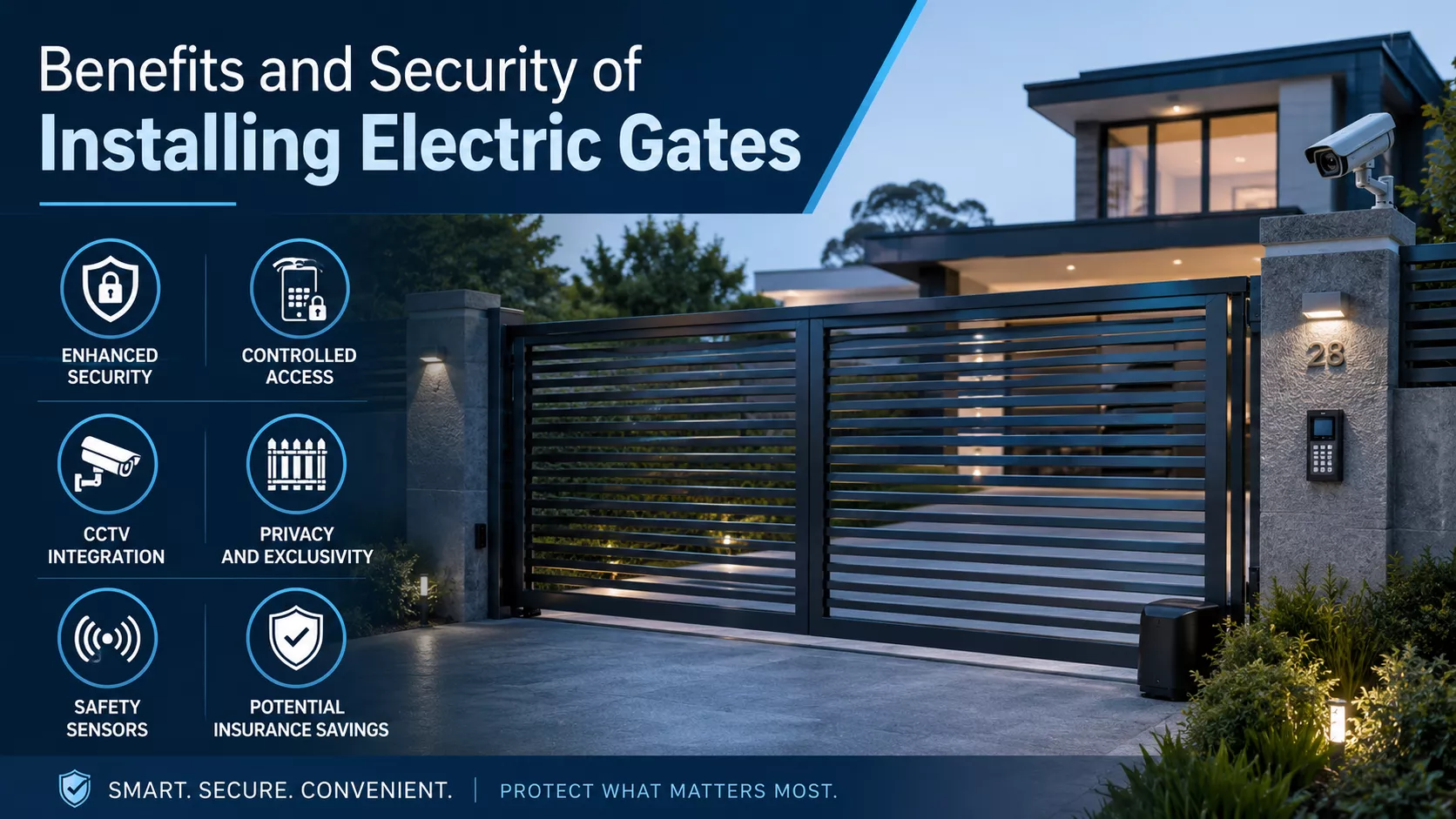
Electric gate access control systems are essential for securing residential, commercial, and industrial properties. These systems automate gate operation, improving security while offering ease of use. They provide a seamless way to manage entry and exit, ensuring that only authorised individuals gain access to the premises.
At the core of electric gate access control is its integration with various technologies, such as keypads, remote fobs, biometric scanners, or mobile apps. These systems allow for restricted access, preventing unauthorised individuals from entering. The combination of electric gates and access control systems offers advanced security, reducing the risk of theft, vandalism, or unauthorised intrusions.
Electric gates are typically powered by electric motors and can be controlled remotely or via automated systems. Access control mechanisms can be programmed to restrict entry based on time, user identity, or access permissions. This level of flexibility makes it ideal for high-security areas, as well as properties requiring restricted access, such as gated communities, factories, or private estates.
The convenience of remote control, combined with enhanced security measures, makes electric gate access control an indispensable solution for modern properties, balancing safety with ease of access.
How do Remote Control Access Systems work?
Remote control access systems provide a simple and efficient solution for managing entry to gates, doors, and barriers. These systems enhance both security and convenience. Key features include:
- Convenience: Remote control allows users to open gates or doors without leaving their vehicle or walking to the entry point.
- Technology Integration: Typically uses radio-frequency identification (RFID), infrared signals, or mobile applications for operation.
- User Access: Operates via dedicated remotes, smartphone apps, or key fobs, offering flexible access options.
- Security: Can be integrated with additional security systems, such as CCTV, intercoms, and alarms, providing a multi-layered approach to safety.
- Customised Permissions: Advanced systems allow for time-based or permission-based access, ensuring only authorised individuals gain entry.
- Ideal for Restricted Access: Perfect for gated communities, private properties, businesses, and locations that require secure, controlled access.
These features make remote control access systems a top choice for properties requiring secure yet convenient access solutions.
What are Keypad Entry Systems and how do they function?
Keypad entry systems offer an efficient and budget-friendly solution for controlling access to properties, especially in residential and commercial areas. Key features include:
- Simplicity: Users enter a PIN code on the keypad to gain access, providing a straightforward and reliable method of entry.
- Cost-Effective: Compared to more complex systems, keypads require minimal maintenance and have lower installation costs.
- Customisable Access: Access codes can be assigned to individuals, providing flexibility for managing permissions.
- Security Features: Advanced models include encryption or anti-tamper features to enhance security and prevent unauthorised access.
- Easy Integration: Can be easily combined with other security systems, such as CCTV cameras and alarms, for a more robust security solution.
- Durability: Designed for both residential and commercial use, these systems offer long-lasting performance with minimal upkeep.
Keypad entry systems offer a reliable, low-maintenance option for managing access while ensuring security.
What are Intercom and Video Entry Systems used for in access control?
Intercom and video entry systems enhance security and communication by allowing property owners to verify visitors before granting access. These systems combine audio and video functionality, providing an additional layer of safety compared to traditional access control methods.
Intercom systems enable two-way communication between the visitor and the property owner. This allows users to ask for identification or confirm the purpose of the visit before opening gates or doors. Video entry systems take this further by incorporating a camera, offering a live feed of the visitor. This visual confirmation significantly reduces the risk of unauthorised access.
Key features of intercom and video entry systems include:
- Two-Way Communication: Allows the property owner to speak directly with the visitor.
- Video Surveillance: Provides a real-time visual of the person requesting access, enhancing security.
- Remote Access: Many systems allow users to control access remotely, offering flexibility.
- Integration with Other Systems: Can be combined with keypads, electric gates, and alarm systems for a comprehensive security solution.
- User-Friendly: Modern systems are easy to operate and install, offering convenience for residential and commercial properties.
These systems are particularly effective for high-security areas, offering a seamless balance between accessibility and protection.
How does Smartphone App-Based Access work for security?
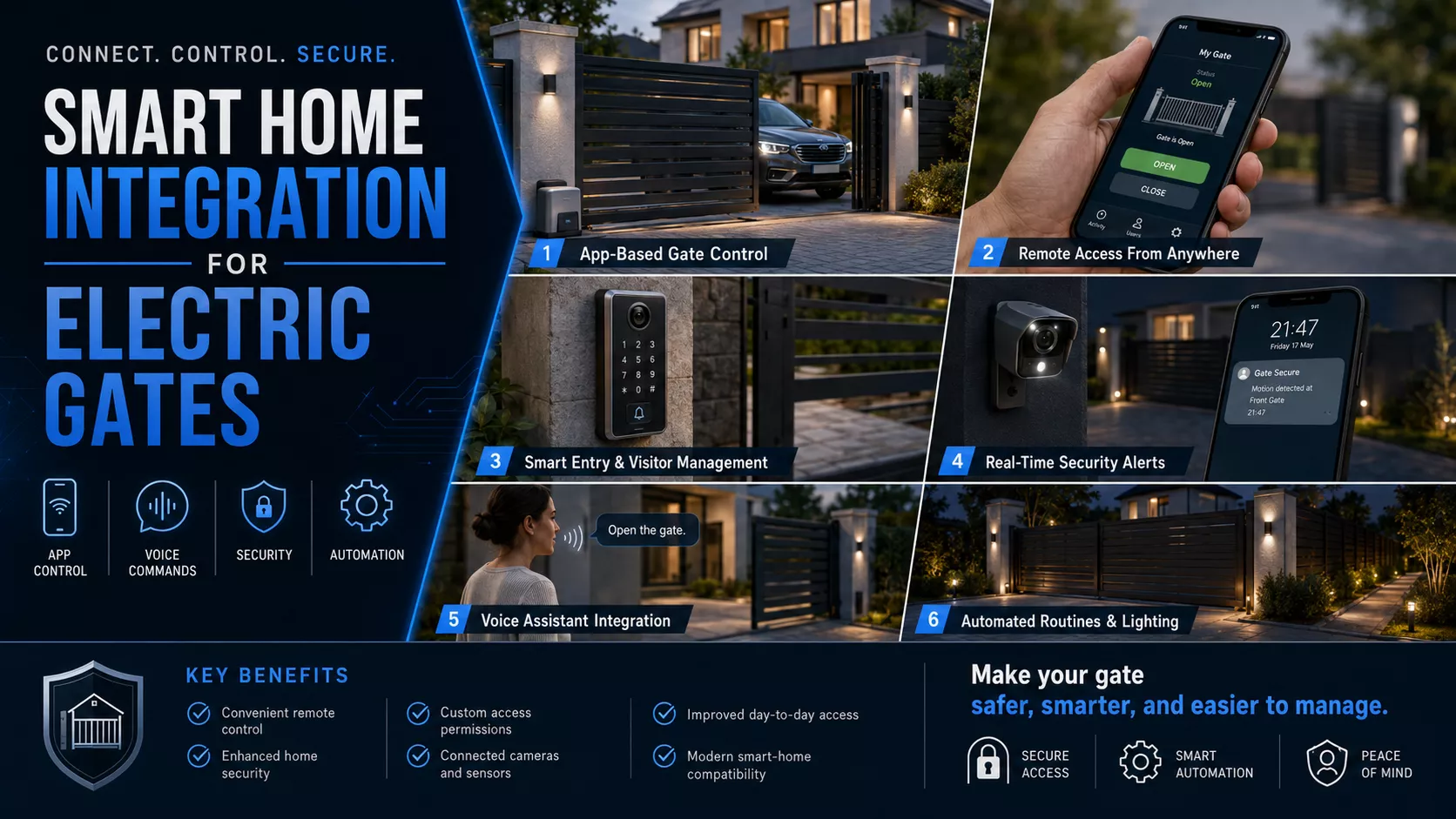
Smartphone app-based access systems offer a modern and convenient way to control entry to gates, doors, and other access points. By using mobile apps, property owners can manage security remotely, providing seamless access control from virtually anywhere.
These systems typically rely on Bluetooth, Wi-Fi, or cellular networks to connect the smartphone with the access point. Users can unlock gates, doors, or barriers with a simple tap on their phone, eliminating the need for traditional keys, cards, or fobs.
Key benefits of smartphone app-based access systems include:
- Convenience: Access control is just a tap away, allowing users to open gates or doors without the need for physical keys or remotes.
- Remote Control: Many apps allow users to control access from any location, enhancing flexibility for property owners and tenants.
- Customisable Permissions: Users can set access permissions for different individuals and manage time-based access for enhanced security.
- Integration with Other Systems: These apps can be linked with video entry systems, intercoms, or security alarms for a comprehensive security solution.
- User-Friendly: Most apps are easy to download and navigate, making the system accessible to a wide range of users.
Smartphone app-based access offers an efficient, secure, and flexible solution, making it an ideal choice for modern properties and high-tech security setups.
What is RFID Access Control and how does it enhance security?
RFID (Radio Frequency Identification) access control systems are an advanced security solution that utilises radio waves to manage entry to gates, doors, or restricted areas. These systems work by using RFID tags, which contain unique identification data, and RFID readers, which detect the tags and grant or deny access based on pre-set permissions.
RFID access control offers several key benefits:
- Contactless Operation: Users simply need to carry an RFID tag or card, which is detected by the reader without the need for physical contact.
- Enhanced Security: RFID tags are difficult to duplicate, reducing the risk of unauthorised access.
- Efficiency: The system allows for quick and seamless entry, making it ideal for high-traffic areas where speed is essential.
- Customisable Access: Access rights can be easily updated, allowing for flexible permission settings based on individual or group requirements.
- Integration: RFID systems can be integrated with other security solutions, such as CCTV cameras and alarms, for a comprehensive security system.
RFID access control is particularly effective in managing access for employees, residents, or authorised visitors in commercial, industrial, and residential properties.

RFID Access Control and Security
What is Automatic Number Plate Recognition (ANPR) in access control?
Automatic Number Plate Recognition (ANPR) systems are an advanced access control solution that uses high-resolution cameras and sophisticated software to identify vehicle number plates. This technology enables automatic recognition of authorised vehicles, granting them seamless access to gates, barriers, or restricted areas without the need for manual intervention.
ANPR systems offer several advantages:
- Efficient and Contactless: The system automatically captures and processes number plates, eliminating the need for drivers to stop, use cards, or input codes.
- Enhanced Security: ANPR can track and log all vehicle movements, providing a secure, tamper-proof record of entries and exits.
- Quick and Reliable: Vehicles are granted access quickly once identified, reducing waiting times and improving traffic flow.
- Customisable: Access permissions can be set for specific vehicles, allowing only authorised cars to pass through, while others are blocked.
- Integration: ANPR systems can be integrated with other security measures like CCTV, alarms, or gate control systems for a more comprehensive solution.
ANPR is particularly useful for high-security areas such as gated communities, parking facilities, and industrial sites, providing a seamless, automated method of access control that enhances both convenience and safety.
How does Biometric Access Control improve security?
Biometric access control systems provide a highly secure and efficient method of managing entry to electric gates and other restricted areas by using unique biological traits for identification. These systems typically rely on fingerprint, facial recognition, iris scanning, or voice recognition technologies to verify individuals before granting access.
Key advantages of biometric access control include:
- Enhanced Security: Biometric traits are unique to each individual, making them extremely difficult to replicate or steal, offering a high level of protection against unauthorised access.
- Accuracy and Speed: The system quickly scans and verifies the biometric data, providing fast and reliable access with minimal waiting times.
- No Physical Keys: Unlike traditional access methods, there is no need for cards, keys, or PIN codes, reducing the risk of lost or stolen access credentials.
- Audit Trails: Biometric systems can record access events, providing valuable data for security monitoring and audit purposes.
- Non-transferable: Since biometric data is specific to the individual, it cannot be shared, lost, or transferred, ensuring that only the authorised user can gain access.
Biometric access control is ideal for high-security locations, such as government buildings, data centres, or private estates, offering a secure, user-friendly solution for controlling access.
What are the differences between Wired and Wireless Access Control Systems?
When choosing between wired and wireless access control systems, it’s important to understand the key differences in terms of installation, security, and flexibility.
- Wired Access Control Systems: These systems use physical cables to connect components such as card readers, controllers, and electric gates. Wired systems are known for their reliability and security, as the connection is less susceptible to interference or hacking. However, the installation process can be more complex and intrusive, requiring extensive wiring and possibly disrupting the property’s infrastructure. Wired systems are typically favoured in large, permanent installations where stability is essential.
- Wireless Access Control Systems: These systems operate using Wi-Fi, Bluetooth, or cellular networks to connect devices. Wireless systems are easier to install, offering greater flexibility and the ability to scale without the need for extensive wiring. They are ideal for temporary setups or properties that require rapid deployment. However, wireless systems may be vulnerable to interference from external sources or cyber threats, potentially affecting security.
Both systems have their merits, with wired systems offering greater security and stability, while wireless systems provide convenience and adaptability. The choice depends on the specific needs of the property and the level of security required.
What are the key Data Privacy, GDPR, and Legal Considerations for access control systems?
When implementing access control systems, particularly those that collect personal data, such as biometric or RFID systems, it is essential to consider data privacy and legal requirements, including compliance with the General Data Protection Regulation (GDPR).
Under GDPR, businesses must ensure that any personal data collected is secure, transparent, and used only for legitimate purposes. This includes obtaining explicit consent from individuals before collecting their biometric data or other sensitive information. Additionally, businesses must provide individuals with clear information on how their data will be stored, processed, and used, and offer them the right to access or delete their data.
Data minimisation is another key principle under GDPR, meaning only the necessary data should be collected and retained for the required duration. Access control systems must be designed to protect this data from unauthorised access, hacking, or breaches.
Legal considerations also extend to data storage, where data should be encrypted and securely stored. Furthermore, any access control system should include an audit trail to monitor and record access attempts, helping organisations comply with regulatory requirements and ensure accountability.
Failing to adhere to GDPR and data privacy laws can result in substantial fines, making legal compliance an essential part of the access control system design.
How to Choose the Right Access Control System?
Choosing the right access control system for your property involves considering several factors, such as security needs, budget, and ease of use. The first step is to assess the level of security required. For high-security areas, systems like biometric access control or ANPR may be ideal, offering robust protection against unauthorised access. For less critical environments, simpler solutions like keypad or RFID systems might suffice.
Next, evaluate the installation process. Wired systems tend to provide more stable connections but require complex, potentially invasive installation. In contrast, wireless systems offer greater flexibility, easier installation, and the ability to scale, though they may be more prone to interference.
Consider the integration capabilities of the system. Many modern access control solutions can be combined with other security features like CCTV cameras, alarm systems, or intercoms, providing a comprehensive security solution.
Also, think about user convenience. Some systems allow remote management through smartphone apps, while others rely on physical access cards or PIN codes. Lastly, make sure the system complies with legal and data privacy regulations, such as GDPR, to protect sensitive information.
Frequently Asked Questions
The best gate access control system depends on the specific security needs, but biometric systems and ANPR offer high security, while RFID and keypad systems are more cost-effective.
A gate access control system is a security solution that manages entry to a property or area, allowing or restricting access based on identification methods such as keypads, RFID, or biometrics.
The three main types of access control systems are discretionary access control (DAC), mandatory access control (MAC), and role-based access control (RBAC).
Electronic access control systems use electronic devices, such as keypads, RFID readers, or biometrics, to control and monitor access to secured areas, providing a more secure and efficient alternative to traditional lock-and-key methods.