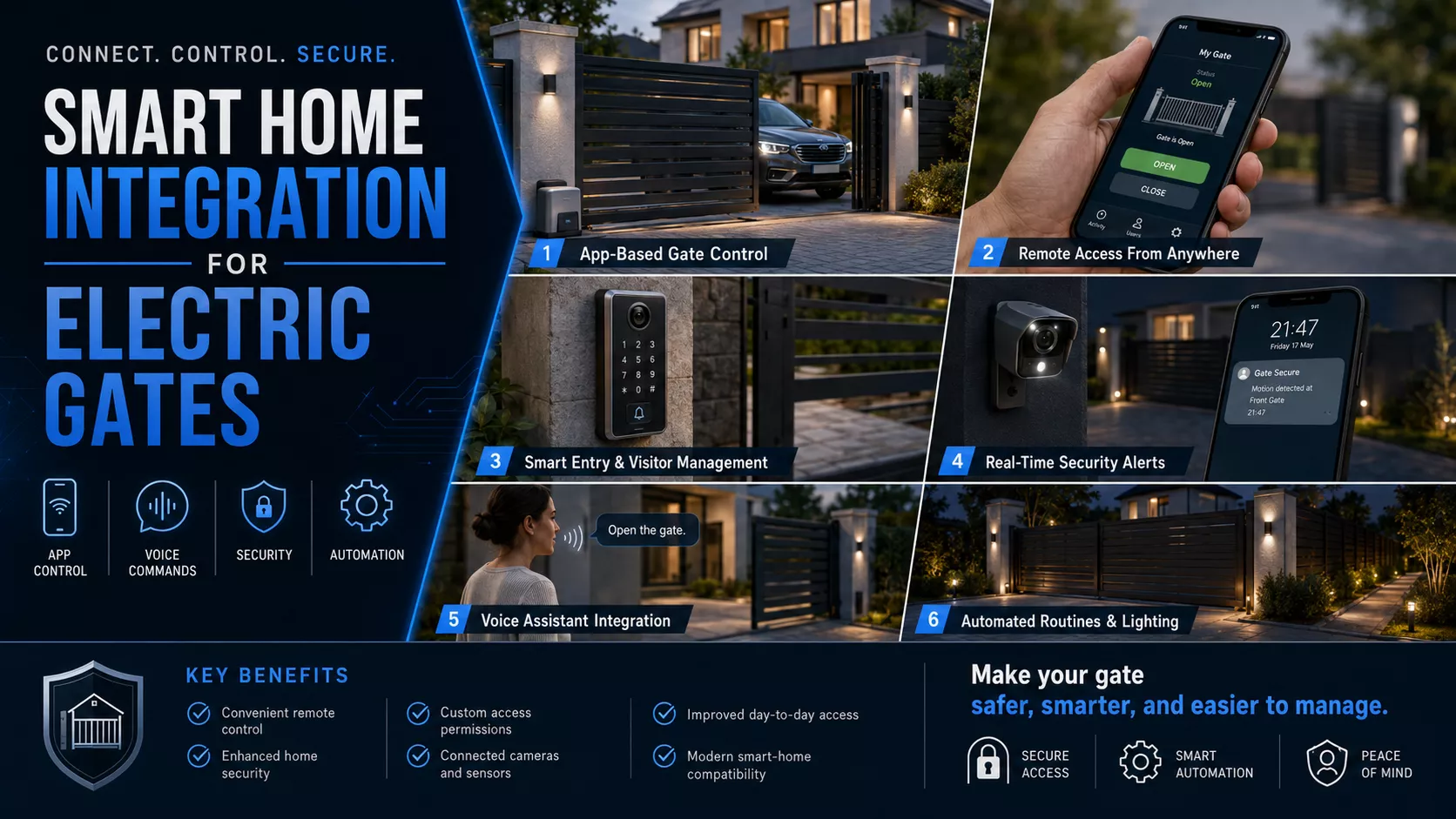
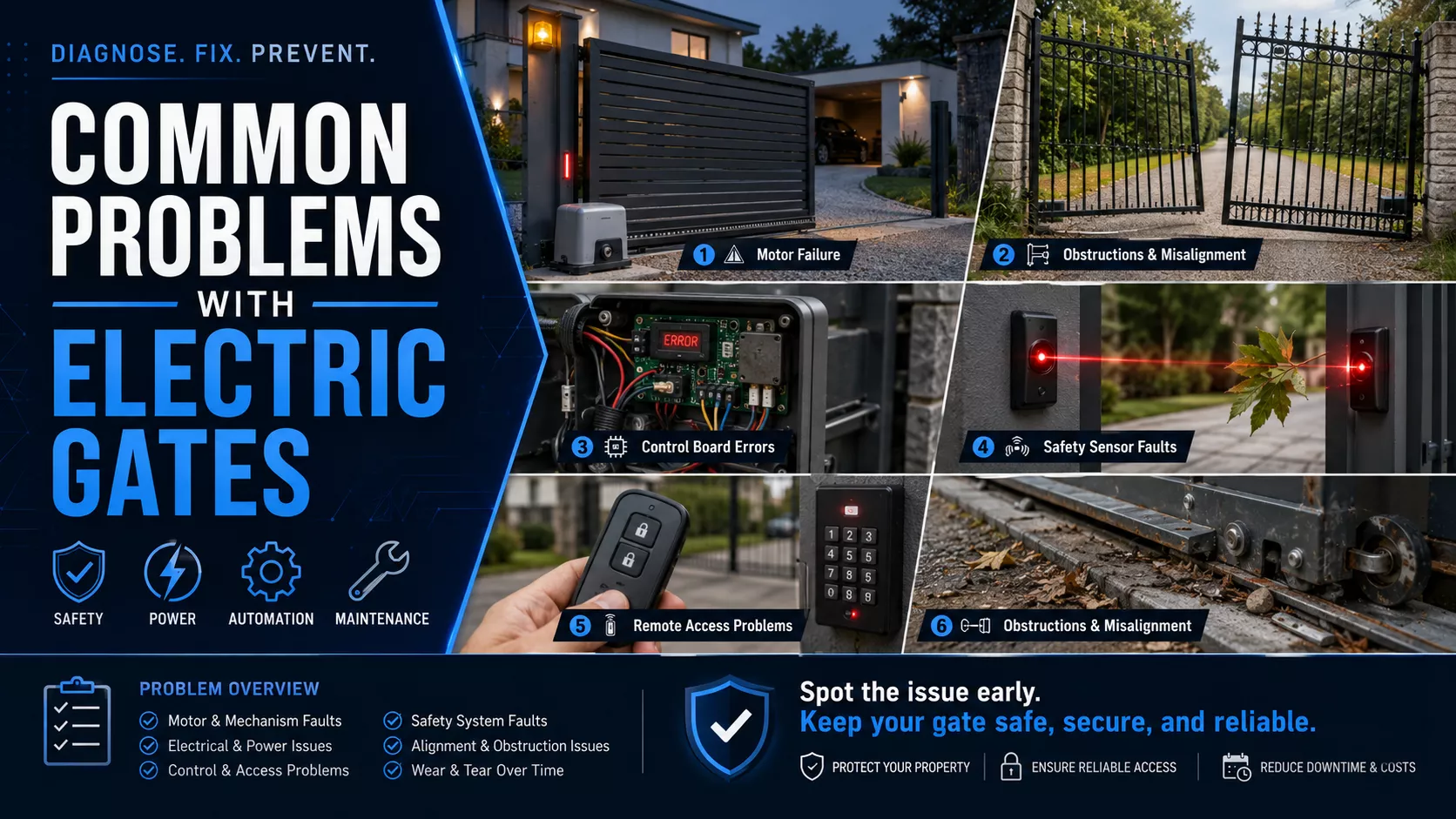
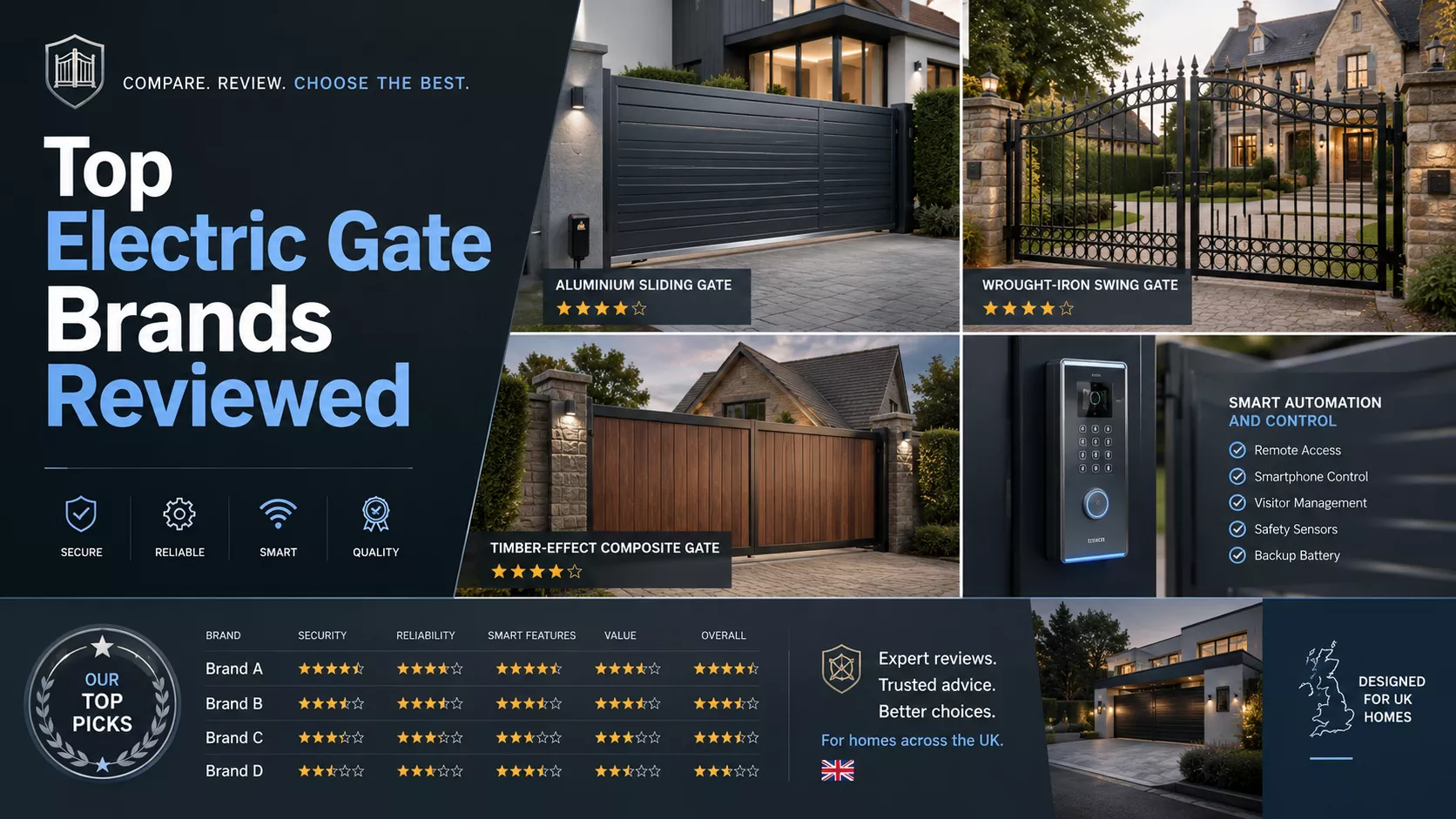
Electric gate legal compliance matters because powered gates use force, moving parts, sensors, motors, and access controls that affect public safety. Poor installation or weak maintenance increases the risk of crushing, trapping, impact injuries, property damage, insurance issues, and legal claims. Safe electric gates need correct design, risk assessment, safety devices, force control, testing, and service records.
UK electric gate compliance is linked to the Supply of Machinery (Safety) Regulations 2008, the Health and Safety at Work etc. Act 1974, the Workplace (Health, Safety and Welfare) Regulations 1992, and recognised standards such as EN 12453, EN 12445, and EN 12635. New powered gates need safe construction, conformity documents, and suitable safety measures. Commercial, workplace, and communal gates also need regular inspection and maintenance to protect staff, visitors, residents, delivery drivers, and the public.
EN 12453:2017 sets safety performance rules for power-operated gates, doors, and barriers. It covers force limits, hazard control, safety device response, obstacle detection, and safe operation. EN 12445:2017 supports this by setting force testing methods. These tests check whether the gate stops, reverses, or limits force correctly when it meets an obstruction.
Installers have legal duties to assess hazards before fitting an electric gate. Key risks include crushing, shearing, trapping, dragging, and impact points. A compliant installation needs suitable safety devices, such as photocells, safety edges, light curtains, laser scanners, force limitation, and emergency release. Installers also need to provide handover instructions, user guidance, maintenance advice, and safety documentation.
Property owners have ongoing duties after installation. Owners need to keep the gate safe, tested, and maintained. Commercial and shared sites need stronger records, including service logs, risk assessments, repair notes, and checks by competent professionals. Safety devices need routine testing because weather, wear, damage, ground movement, and daily use affect gate performance.
Planning permission depends on gate height, location, and property status. Gates over 2 metres usually need planning permission. Gates next to a highway or footpath often need permission when they exceed 1 metre. Listed buildings, conservation areas, and local restrictions create extra planning duties. Safety compliance still applies even when planning permission is not required.
GDPR applies when electric gates use cameras, intercoms, access logs, number plate recognition, apps, fobs, or visitor records. Access control and surveillance systems need a lawful reason for data use, clear signage, limited data retention, secure storage, restricted access, and respect for data subject rights. Higher-risk surveillance systems need a Data Protection Impact Assessment.
Non-compliance creates serious risks for owners and installers. Possible outcomes include fines, enforcement action, compensation claims, insurance refusal, litigation, reputational harm, and criminal liability in severe cases. Safe design, professional installation, force testing, planned servicing, compliance audits, and clear records help keep electric gates legal, safe, and reliable.
Table of Contents
- 1. Why Legal Compliance Matters for Electric Gates?
- 2. What Are the Key UK Laws & Regulations for Electric Gates?
- 3. What Is the UK Machinery Directive 2006/42/EC for Electric Gates?
- 4. What Are the Safety Performance Standards for Electric Gates under EN 12453:2017?
- 5. What Are the Testing & Certification Standards for Electric Gates under EN 12445:2017?
- 6. What Are the Legal Responsibilities of Installers for Electric Gates?
- 7. What Are the Legal Responsibilities of Property Owners for Electric Gates?
- 8. Do Electric Gates Require Planning Permission & What Are the Building Regulations?
- 9. How Does GDPR Compliance Apply to Access Control & Surveillance Systems?
- 10. Why Are Risk Assessments & Ongoing Compliance Audits Important for Electric Gates?
- 11. What Are the Legal Consequences of Non-Compliance with Electric Gate Regulations?
- 12. Frequently Asked Questions
Why Legal Compliance Matters for Electric Gates?
Legal compliance safeguards both property owners and the public from hazards linked to electric gates. These automated systems, when improperly installed or maintained, generate serious safety risks. Electric gates exert significant force; faulty sensors or control failures may cause crushing injuries or fatalities. Adhering to safety standards like EN 12453 and EN 12635 mitigates these dangers.
Non-compliance directly exposes owners to legal liabilities. Regulatory breaches can trigger severe penalties, including fines, compensation claims, and costly litigation. Courts often rule against negligent parties if injury or damage results from regulatory violations.
Insurance providers typically require full compliance with legal and safety standards. If an accident occurs involving a non-compliant gate, insurers may deny coverage, leading to substantial financial loss. Property value may also decline if installations fail regulatory inspections.
Beyond legal and financial consequences, compliance promotes public safety and community well-being. Secure installations prevent unauthorised access, reduce nuisance, and foster trust within neighbourhoods. Entities such as businesses, schools, and residential complexes rely on these standards to maintain harmonious environments.
Compliance is not optional; it is a legal and ethical obligation. Certified professionals must conduct installation, risk assessment, and routine maintenance to ensure full adherence.
What Are the Key UK Laws & Regulations for Electric Gates?
In the UK, electric gates are regulated by several important laws and standards to ensure their safety, compliance, and functionality. Key regulations include:
Supply of Machinery (Safety) Regulations 2008:
Implements the European Machinery Directive (2006/42/EC).
New powered gates must have a CE mark and a Declaration of Conformity to demonstrate compliance with safety standards.
Health and Safety at Work etc. Act 1974:
Section 3 places a duty on gate owners and employers to ensure the safety of electric gates for all users, including the public.
This law ensures gates are risk-free and do not cause harm to individuals.
Workplace (Health, Safety, and Welfare) Regulations 1992:
These regulations apply to gates in the workplace or communal areas.
They require that gates be regularly maintained and inspected to meet safety requirements.
BS EN 12453:2001 Standard:
Specifies safety requirements for power-operated doors and gates.
Covers maximum allowable forces and response times for safety devices, ensuring gates operate safely in various environments.
Planning Permission:
Generally, planning permission is not required for new gates or the replacement of existing ones.
Gates must adhere to specific height restrictions and other criteria to avoid the need for approval.
These regulations ensure electric gates are installed and maintained safely, protecting users and complying with legal standards.
What Is the UK Machinery Directive 2006/42/EC for Electric Gates?
The UK Machinery Directive 2006/42/EC governs the safety requirements for powered gates, ensuring they are designed, manufactured, and maintained to be safe for both users and the public. Transposed into UK law through the Supply of Machinery (Safety) Regulations 2008, the directive sets out strict guidelines for the construction and operation of machinery, including electric gates.
Key aspects of the directive include:
Design and Construction:
Powered gates must be constructed to minimise risks during operation. This involves rigorous risk assessments to identify potential hazards.
CE Marking:
To demonstrate compliance, electric gates must be CE marked. This mark indicates that the gate meets all relevant health, safety, and environmental protection standards.
Declaration of Conformity:
Manufacturers must provide a Declaration of Conformity, which confirms that the gate meets all applicable safety requirements set out in the directive.
Safety Features:
Gates must include safety features such as sensors, emergency stops, and force limiters to protect users from injury.
The directive plays a crucial role in ensuring powered gates operate safely and minimise risks, safeguarding the public and users.
What Are the Safety Performance Standards for Electric Gates under EN 12453:2017?
EN 12453:2017 outlines the safety performance standards for power-operated doors, gates, and barriers, focusing on applications in industrial, commercial, and garage settings. This standard sets clear requirements to ensure that electric gates are designed, installed, and maintained to provide safe operation for users.
Key provisions of EN 12453:2017 include:
Maximum Force Limits:
The standard specifies the maximum force that gates can exert during operation. This is to prevent injuries caused by excessive force, ensuring gates do not pose a crushing or trapping hazard.
Safety Devices:
Gates must be equipped with safety devices such as sensors, obstacle detection systems, and emergency stop features. These devices automatically detect objects or individuals in the gate’s path, preventing accidents.
Response Times:
The standard stipulates acceptable response times for safety mechanisms. For example, gates must stop or reverse promptly if an obstruction is detected.
Periodic Testing and Maintenance:
Regular inspections and maintenance are required to ensure continued compliance with safety standards. This includes testing safety features and ensuring the gate remains in good working condition.
EN 12453:2017 plays a critical role in safeguarding both users and the public by enforcing strict safety requirements for electric gates.
What Are the Testing & Certification Standards for Electric Gates under EN 12445:2017?
EN 12445:2017 outlines the testing and certification standards for power-operated doors, gates, and barriers, focusing on the forces they exert during operation. This standard is essential for ensuring compliance with safety regulations such as BS EN 12453 and the European Machinery Directive.
Key elements of EN 12445:2017 include:
Force Testing:
The standard specifies detailed testing methods for measuring the forces exerted by automated gates. These tests assess whether the gate’s operation is safe, preventing hazardous force levels that could lead to injury.
Safety in Use:
It ensures that gates are safe for all users by setting acceptable force limits. The standard aims to prevent accidents, such as crushing or impact injuries, by ensuring the gate’s force does not exceed safe thresholds.
Compliance with BS EN 12453:
EN 12445:2017 supports BS EN 12453 by testing gates for their safety features, including maximum force exertion. This ensures that gates meet the essential performance criteria required for safe operation.
Risk Assessment:
The standard works in conjunction with comprehensive risk assessments to identify potential hazards and apply necessary safety measures during installation and operation.
Periodic Checks:
Gates must undergo regular force re-testing as part of an ongoing maintenance schedule to ensure continued safety compliance.
EN 12445:2017 is crucial for verifying the safe operation of automated gates.
What Are the Legal Responsibilities of Installers for Electric Gates?
Installers of electric gates have several legal obligations to ensure that gates are safe and comply with relevant regulations. These responsibilities include:
Risk Assessment:
Installers must conduct a thorough risk assessment to identify potential hazards such as crushing, shearing, and impact points that could harm users during gate operation.
Compliance with Regulations:
The installation must comply with the Supply of Machinery (Safety) Regulations 2008, ensuring that the gate is safe to operate and meets required safety standards.
Safety Devices:
Installers are responsible for fitting appropriate safety devices, such as photocells, light curtains, laser scanners, and safety edges, to prevent accidents and reduce risks during gate operation.
Force Limitation:
In areas with crushing or shearing hazards, installers must ensure the gate’s force is limited to a maximum of 400N before reversing, reducing to below 150N within 0.75 seconds of contact.
Emergency Release:
The gate should be fitted with an emergency release mechanism, and users must be trained on its proper operation.
Instruction and Handover:
Installers must provide clear instructions on the gate’s safe use, maintenance, and emergency procedures.
Maintenance and Servicing:
Installers should inform users about the importance of regular maintenance to ensure ongoing safety and legal compliance.
Failure to comply with these responsibilities can lead to legal liabilities for the installer, including fines or compensation claims for injuries caused by faulty installations.
What Are the Legal Responsibilities of Property Owners for Electric Gates?
Property owners, especially those with powered gates, must uphold several legal responsibilities to ensure safety and compliance with regulations. Key legal duties include:
Duty of Care:
Owners must ensure the gate is safe to operate for all users, maintaining a secure environment for those using or near the gate.
Workplace Regulations (for commercial properties):
Under Regulations 18 and 5 of the Workplace (Health, Safety and Welfare) Regulations 1992, owners must ensure the gate is safely designed, constructed, and regularly maintained in commercial settings.
Health and Safety at Work Act 1974:
Section 3 of this Act requires owners to maintain the safety of powered gates for all users, including employees and visitors, to prevent accidents.
Regular Servicing:
Professional servicing and safety checks are recommended to ensure continued safe operation, particularly for commercial gates. While not mandatory for residential gates, regular servicing is advisable.
Maintenance Log:
Owners should keep a maintenance log to track servicing and repairs, demonstrating a proactive approach to safety.
Risk Assessments:
Regular risk assessments help identify hazards and ensure the gate remains safe, especially if there are changes to the environment or operational conditions.
Safety Devices:
Safety devices, such as photocells and emergency stops, must be routinely checked for functionality.
Competent Persons:
Only qualified professionals should handle installation, maintenance, and repairs to ensure compliance with safety standards.
Property owners must also be mindful of planning permissions and other local regulations for gate installations.
Do Electric Gates Require Planning Permission & What Are the Building Regulations?
When installing electric gates, it is essential to understand both planning permission and building regulations to ensure compliance with local laws and safety standards.
Planning Permission
General Rule: Planning permission is typically not required if the gates are under 2 meters high.
Highway Proximity: If the gates are near a highway or footpath and exceed 1 meter in height, planning permission may be required.
Height Restrictions: Gates exceeding 2 meters generally need planning permission.
Listed Buildings & Conservation Areas: Properties that are listed or located in conservation areas may require planning permission for gate installation.
Permitted Development Rights: Some gates may be allowed without planning permission, but local conditions or restrictions might apply.
Building Regulations
Safety Standards: Building regulations focus on safety aspects, such as force limitations, pinch points, and safe operating mechanisms.
Professional Installation: To ensure compliance, gates should be installed by qualified professionals.
Compliance Checks: Post-installation checks are necessary to ensure that the gates meet all safety standards.
Planning Permission & Building Regulations Summary Table
Condition | Planning Permission Needed? | Building Regulations Compliance |
Gates under 2 meters in height | Not required | Safety checks and compliance needed |
Gates over 2 meters in height | Required | Safety checks and compliance needed |
Gates near a highway (>1 meter high) | Possible, depending on location | Safety checks and compliance needed |
Listed buildings & conservation areas | Required | Safety checks and compliance needed |
Permitted Development Rights | Not required, if conditions met | Safety checks and compliance needed |
This table helps clarify when planning permission is required and the essential building regulations that must be followed for safe, legal installation. Always consult the local planning authority before installation.
How Does GDPR Compliance Apply to Access Control & Surveillance Systems?
When implementing access control and surveillance systems, compliance with the General Data Protection Regulation (GDPR) is crucial to protect personal data and avoid legal penalties. GDPR governs how personal data is collected, stored, and processed, ensuring individuals’ privacy rights are respected. This applies to systems that monitor or restrict access to properties, businesses, and other sensitive areas.
Key aspects of GDPR compliance for access control and surveillance systems include:
Data Minimisation:
Only necessary data should be collected. Surveillance cameras, for example, should capture footage only relevant to security, avoiding excessive or irrelevant monitoring. Data should not be retained longer than necessary for the purpose.
Data Subject Rights:
Individuals must be informed about the data being collected and their rights. This includes rights to access, rectification, and erasure of personal data, as well as the right to object to surveillance.
Security of Data:
Personal data must be securely stored and protected from unauthorised access, loss, or destruction. For instance, video footage should be encrypted, and access should be restricted to authorised personnel.
Transparency:
Clear signage must inform individuals about the presence of cameras and access control systems. This promotes transparency and allows individuals to make informed decisions about their privacy.
Data Protection Impact Assessment (DPIA):
A DPIA should be conducted before implementing or updating surveillance or access control systems to assess privacy risks and ensure compliance with GDPR.
Compliance with GDPR ensures that access control and surveillance systems protect personal data, mitigate legal risks, and maintain trust with users.
Why Are Risk Assessments & Ongoing Compliance Audits Important for Electric Gates?
Regular risk assessments and compliance audits are vital to ensuring electric gates operate safely and in line with legal standards. These processes help identify potential hazards and verify the system meets regulatory requirements, thereby preventing accidents and maintaining safety.
Key Aspects of Risk Assessments and Compliance Audits:
Activity | Description | Frequency |
Risk Assessments | Identify potential hazards such as crushing, shearing, or entrapment risks. Evaluate the gate’s location, force limits, and safety features. | Regularly and after any changes to the environment or system |
Compliance Audits | Verify that the gate meets regulatory standards (e.g., EN 12453, EN 12445). Check safety devices, maintenance logs, and gate conditions. | Annually or as per manufacturer’s guidelines |
Adapting to Changes | Update risk assessments when there are modifications to the gate system or surrounding area. | As needed after operational changes |
Documenting Compliance | Maintain detailed records of risk assessments, audits, and corrective actions taken for future reference or inspections. | Ongoing, with periodic reviews |
By conducting these regular evaluations, property owners can ensure the electric gates remain safe, compliant with regulations, and fully operational. These assessments provide critical insight into potential risks and help mitigate any safety concerns.
What Are the Legal Consequences of Non-Compliance with Electric Gate Regulations?
Failure to comply with safety regulations and legal standards for electric gates can lead to serious legal consequences. Property owners and installers are legally required to ensure gates meet safety criteria, such as force limits and proper safety devices. Non-compliance can result in:
Substantial Fines:
Breaching safety regulations, such as those outlined in the Supply of Machinery (Safety) Regulations 2008 or the Health and Safety at Work Act 1974, can result in heavy fines. These penalties are designed to encourage adherence to safety standards and protect individuals from harm.
Imprisonment:
In extreme cases, failure to comply with regulations can lead to criminal charges, with potential imprisonment for those responsible. This is especially true if non-compliance leads to injury or death due to negligence or unsafe installation.
Civil Liability:
Property owners may also face compensation claims from injured parties. In cases where the gate causes harm due to improper installation or lack of safety features, the responsible party could be held liable for medical costs, lost wages, and other damages.
Reputational Damage:
Non-compliance can also damage the reputation of businesses, leading to loss of clients or customers and potential public backlash.
Ensuring compliance with legal requirements for electric gates is essential not only to avoid legal and financial penalties but also to promote public safety.
Frequently Asked Questions
Electric sliding gates must comply with force limits, include safety devices like photocells and safety edges, and ensure emergency stop functionality.
A risk assessment identifies hazards like crushing or shearing risks, evaluates safety devices, and ensures compliance with safety standards.
Electric gates must meet EN 12453 for safety requirements and EN 12445 for force testing, ensuring compliance with UK regulations like the Supply of Machinery (Safety) Regulations 2008.
- Electric gates require regular checks on safety devices, force limits, and mechanical components. Periodic servicing and inspections ensure compliance and safe operation.