Table of Contents
- 1. What Is Powder Coating and How Is It Defined?
- 2. When Was Powder Coating Invented and How Has It Evolved?
- 3. How Does the Powder Coating Process Work?
- 4. What Types of Powder Are Used in Powder Coating?
- 5. What Are the Main Benefits of Powder Coating?
- 6. Where Is Powder Coating Commonly Used?
- 7. How Does Powder Coating Compare to Traditional Paint?
- 8. Is Powder Coating the Right Choice for Your Project?
What Is Powder Coating and How Is It Defined?
Powder coating is a dry coating process that applies electrostatically charged powder to a surface. After curing, it forms a durable, high-performance finish. Unlike painting, plating, or anodising, it uses no solvents and relies on heat to bond.
This solvent-free method is part of the dry coating process family, offering excellent surface coverage and resistance. It enhances both aesthetic appeal and material protection, making it ideal for industrial coatings. The process supports eco-friendly production, reduced waste, and long-term durability across applications.
How Is Powder Coating Technically Defined?
Powder coating is a dry finish applied via electrostatic spray deposition (ESD). The powder sticks to a grounded object and, once cured with heat, forms a hard, continuous layer. It eliminates solvents entirely and uses a powder made of polymer resins, pigments, curatives, and flow agents. Curing activates either thermoset cross-linking or thermoplastic melting.
What Is the Powder in Powder Coating?
The powder consists of:
- Polymer resins for film formation
- Pigments for colour and opacity
- Curing agents for thermosets
- Additives for flow, texture, and degassing
This allows a high-build, smooth finish with minimal dripping or sagging.
How Is the Powder Applied to Surfaces?
Via electrostatic spray deposition (ESD):
- The object is grounded.
- Powder is electrostatically charged.
- Charged particles adhere to the surface.
Overspray is minimal and can be recovered, improving material efficiency.
What Happens During Powder Curing?
Curing involves:
- Heating at 160-200°C
- Duration based on part size and coat thickness
- Thermosets: chemical cross-linking
- Thermoplastics: melt and re-solidify
Proper curing ensures durability, adhesion, and resistance to chemicals.
What Materials Are Used in Powder Coating?
Two main types:
Type | Curing Reaction | Reusable | Heat Resistance |
Thermoset | Irreversible cross-linking | No | High |
Thermoplastic | Melt and re-solidify | Yes | Moderate |
Thermosets offer strong corrosion resistance. Thermoplastics provide impact resistance but can remelt.
What Are the Key Differences Between Paint, Plating, and Anodising?
Coating Type | Material | State | Bonding | Durability |
Powder Coating | Resin | Dry | ESD + Heat | High |
Liquid Paint | Solvent | Wet | Air-dried | Medium |
Plating | Metal | Liquid | Electrochemical | High |
Anodising | Aluminium | Liquid | Electrolytic | Medium-High |
Powder coating creates thicker coats, emits no VOCs, and applies a non-metallic protective layer.
What Are the Main Benefits of Powder Coating?
- Abrasion and corrosion resistance
- Eco-friendly: no VOCs, recyclable overspray
- Fewer coats needed
- Lower lifecycle costs
- Smooth, uniform finish
Where Does Powder Coating Fit in Industrial Applications?
Used on:
- Metal: aluminium, steel
- Non-metals: MDF, composites
- Automotive, appliances, furniture, architecture
It ensures UV, impact, and chemical resistance across industries.
How Versatile Is Powder Coating?
Applied to:
- Metals: tools, wheels, fences
- Non-metals: MDF, plastics
- Items large and small
Available in many colours, textures, and finishes, it suits both functional and decorative needs.
When Was Powder Coating Invented and How Has It Evolved?
Powder coating originated in post-war Europe as a solvent-free alternative to liquid paint. Initially focused on protection, it quickly evolved into a finish known for both performance and aesthetics. Over the decades, innovations in electrostatic spray deposition (ESD), resin chemistry, and curing technologies transformed powder coating into a global standard for industrial coatings.
Today, it’s used across sectors demanding high durability, environmental safety, and visual appeal from automotive and appliances to architecture and general manufacturing.
Where Did Powder Coating Begin? (1940s–1950s)
- Late 1940s: Organic polymers were flame-sprayed onto metal, creating a basic form of dry coating. The method lacked consistency and required specialist equipment.
- 1953: Dr Erwin Gemmer developed the fluidised bed technique in Germany, enabling uniform powder application by suspending particles in air.
- 1955: Gemmer received a patent, marking the first controlled use of thermoplastic powders for functional industrial coatings.
- Late 1950s: Materials like polyethene and nylon became standard for abrasion resistance and insulation.
- Surface preparation techniques started gaining attention to improve coating adhesion and durability in industrial settings.
What Drove Technological Advancements in the 1960s?
The 1960s introduced electrostatic spray deposition (ESD). Dr Pieter de Lange in the Netherlands adapted electrostatics for powder, improving control and reducing waste. A key development was distinguishing thermosets from thermoplastics. Thermosets chemically cross-link during powder curing; thermoplastics melt and resolidify.
Powder coating moved from thick, functional layers to decorative finishes. Resins such as polyester, epoxy, and hybrids were introduced, now standard powder coating materials.
How Did Environmental Regulations Influence Powder Coating Growth?
From 1966–1970, rising environmental concerns drove innovation. Key regulatory actions included:
- Los Angeles Rule 66: Limited VOCs in coatings
- Clean Air Act (1970): Enforced solvent restrictions
Powder coating advantages:
Regulation | Powder Coating Benefits |
VOC limits | Solvent-free, ultra-low emissions |
Waste laws | Overspray is reusable |
Worker safety | Non-toxic and low particulate risk |
These regulations accelerated the adoption of ESD, curing ovens, and automation in North America and Europe.
What Were the Key Milestones in Powder Coating Evolution?
Period | Breakthrough | Significance |
1940s | Flame spraying of polymers | Early form of powder coating |
1953-1955 | Dr Gemmer’s fluidised bed | First patented method |
1962-1964 | ESD process by Dr de Lange | Modern powder spray |
1966-1973 | Thermoset chemistry introduced | Decorative, thinner applications |
1980s-1990s | UV and low-temp curing | Expanded to MDF, plastics, and composites |
Modern day | Smart coatings, antimicrobial tech | Custom finishes for industry needs |
How Has the Powder Coating Process Improved?
Advances enhanced powder coating across stages:
- Powder: Improved flow, gloss retention, cross-linking
- Application: Higher efficiency, less overspray
- Curing: Infrared and UV enable fast, energy-efficient finishes
These changes helped make powder coating a leading industrial finish.
How Does This Evolution Relate to Modern Industry Use?
Powder coating is now:
- Used in automotive, aerospace, appliances, furniture, and architecture
- Known for durability, low emissions, and versatile finishes
Backed by a mature global supply chain and industry standards
How Does the Powder Coating Process Work?
Powder coating is a dry finishing process that uses charged powder particles to create a uniform, durable layer on surfaces. The process involves three main phases: surface preparation, powder application, and heat curing. Each step directly influences the coating’s quality, durability, and appearance.
Surface Preparation
Surface preparation ensures strong adhesion between the powder and the substrate. It’s vital in both decorative and functional powder coating applications.
Cleaning and Degreasing: The surface must be free of oil, grease, rust, and dirt. This is achieved using alkaline cleaners, rinse stages, and drying methods.
Chemical Pre-treatment: Surfaces, especially metals, are treated with iron phosphate, zinc phosphate, or chrome-free zirconium to enhance corrosion resistance and coating adhesion. Aluminium often receives a chromate or titanium-based conversion coating.
Mechanical Pre-treatment: For heavy contaminants, methods like sandblasting, shot blasting, or grit blasting are used. This creates a textured surface, improving mechanical bonding. Abrasive types vary based on the desired finish and substrate sensitivity.
Masking: Certain parts may need to remain uncoated. Masking tapes or dots protect threads or surfaces from powder overspray.
Proper pre-treatment directly affects the performance of thermoset and thermoplastic powder coating systems, especially in industrial coatings.
Electrostatic Application
Powder is applied through Electrostatic Spray Deposition (ESD), which is the industry standard for metal parts.
How Powder Coating Works: Powder coating materials are fluidised and sprayed using a corona or tribo spray gun. The powder particles are charged electrically and attracted to the grounded substrate. This electrostatic attraction helps evenly coat even complex geometries.
Gun Types:
- Corona guns use high-voltage fields.
- Tribo guns charge particles via friction, making them ideal for recessed or complex shapes.
Fluidised Bed Coating: This method preheats the part, then immerses it into an aerated bed of powder. The powder melts on contact and forms a continuous film. It’s mostly used for thermoplastic powders on non-flat or heavy-duty parts.
Importance of Grounding: Effective earthing prevents static discharge, ensures uniform thickness, improves transfer efficiency, and avoids powder waste. It’s a safety and quality-critical factor.
Heat Curing
Curing transforms the powder into a solid, protective layer.
Curing Process: Once applied, the coated part is baked at temperatures between 160–220°C, depending on the powder type and part mass. For thermoset powders, heat initiates a cross-linking reaction that creates a chemically stable finish. Thermoplastics, in contrast, melt and solidify without chemical reaction.
Types of Ovens:
- Convection ovens use circulated hot air and are suitable for large parts.
- Infrared (IR) ovens provide rapid heating for parts with thin sections.
- UV ovens are ideal for heat-sensitive materials like MDF or plastics and use light rather than prolonged heat to cure special UV-curable powders.
Correct curing affects finish quality, weather resistance, and coating longevity.
Environmental and Industrial Value
Powder coating is a dry coating process that produces minimal VOC emissions and overspray waste. With a 95 %+ overspray recovery rate, it is both cost-effective and sustainable. These qualities make it a preferred method across automotive, aerospace, architectural, and general manufacturing sectors.

Working Process of Powder Coating
What Types of Powder Are Used in Powder Coating?
Powder coating uses dry coating materials that form strong, durable finishes after electrostatic spray deposition (ESD) and heat curing. These materials are categorised into thermoset and thermoplastic types, each designed for specific performance needs in industrial coatings.
Thermosets vs Thermoplastics
Powder coating uses two main categories: thermosets and thermoplastics.
- Thermosets cure via chemical cross-linking when exposed to heat. They form a permanent, heat-resistant finish.
- Thermoplastics soften when heated and harden on cooling. They don’t form cross-links and can remelt under heat.
Thermosets are preferred for industrial coatings due to their resistance to chemicals and heat. Thermoplastics are used for flexible, impact-resistant applications like railings or piping.
Common Materials: Epoxy, Polyester, Hybrids
Material | Type | Key Attributes | Best Use |
Epoxy | Thermoset | Corrosion, chemical resistance | Indoor: automotive, appliances |
Polyester | Thermoset | UV stability, exterior durability | Outdoor: fences, furniture |
Hybrid (Epoxy-Polyester) | Thermoset | Decorative, cost-efficient | Furniture, shelving |
Polyurethane | Thermoset | Smooth finish, chemical durability | High-end appliances, wood |
Acrylic | Thermoset | Gloss retention, weather resistance | Auto trim, clear coats |
Nylon | Thermoplastic | Mechanical strength, solvent resistance | Pipes, valves |
Super Durable Polyester | Thermoset | Colour retention, weatherproof | Architectural facades |
Fluoropolymer | Thermoset | Extreme UV and chemical resistance | Harsh environments |
Application Performance
- Electrostatic spray deposition (ESD) applies powders evenly.
- Powder curing fuses particles into a solid coat via heat or UV light.
- The dry coating process eliminates solvents and reduces VOCs.
- Most powder coating materials require proper surface preparation for adhesion.
Custom Finishes
Speciality powders include:
- Anti-graffiti
- Anti-skid
- Sparkle and texture finishes
- Fingerprint-free coatings
These additives enhance the functionality of industrial coatings and decorative applications.
What Are the Main Benefits of Powder Coating?
Powder coating is a modern dry coating process that outperforms liquid paint in durability, environmental safety, and finish quality. It uses electrostatic spray deposition (ESD) to adhere charged powder coating materials to grounded surfaces, followed by powder curing to create a hard, protective layer.
Here’s how it excels:
- Durability and Longevity
Whether using thermoset or thermoplastic resins, powder-coated surfaces resist scratches, UV damage, and rust. Ideal for industrial coatings, it performs exceptionally on treated surfaces post surface preparation, protecting products in harsh conditions for decades. - Cost-Effectiveness
Though the initial setup can be higher, the extended lifespan of powder-coated products reduces maintenance and reapplication needs, offering excellent return on investment. The minimal waste in the powder coating process also contributes to long-term cost savings. - Environmental Benefits
Powder coating emits zero VOCs (Volatile Organic Compounds), unlike traditional liquid coatings. The powder coating process recycles overspray, reducing waste. This makes it safer for both workers and the environment, aligning with green manufacturing goals. - Aesthetic Advantages
The powder coating definition includes uniform coverage without drips or runs. It supports gloss, matte, metallic, and textured effects. This broad palette makes it perfect for products demanding visual appeal and high durability across automotive, furniture, and architectural sectors. - Versatility
Powder coating can be applied to a wide range of substrates, including metal, MDF, and select plastics, especially those that tolerate oven curing. It’s compatible with both decorative and functional applications. - Customization
Using various powder coating materials, manufacturers can create finishes with specific characteristics, like anti-graffiti, antimicrobial, or UV-resistant properties, tailored to end-use performance requirements. - High-Volume Production
Thanks to efficient line setups and automation, powder coating is highly scalable. It suits both low- and high-volume production, ensuring consistent quality in mass manufacturing environments. - Safety
The absence of flammable solvents and VOCs improves workplace air quality and reduces fire risk. The electrostatic process used in how powder coating works also ensures safer material handling compared to traditional methods.
These benefits demonstrate why powder coating is the preferred finishing method in diverse industries, delivering efficiency, sustainability, and superior performance.
Where Is Powder Coating Commonly Used?
Powder coating is a dry coating process applied via electrostatic spray deposition (ESD) and hardened through powder curing. The process involves applying charged powder coating materials, which may be thermoset or thermoplastic, onto a properly cleaned surface (surface preparation) to form a durable, decorative layer. It has become the standard in many sectors due to its resistance, aesthetics, and eco-friendliness.
Common Applications of Powder Coating:
- Automotive Industry:
Used on wheels, bumpers, suspension parts, and under-the-hood components. The powder coating process ensures long-term corrosion resistance and impact durability under extreme heat and stress. - Household Appliances:
Found on washers, dryers, refrigerators, and microwaves. The coating withstands temperature cycles, maintains gloss, and resists scratches. - Furniture & Outdoor Equipment:
Ideal for patio furniture, playgrounds, sports gear, and farm machinery. Its UV resistance and protective finish suit these high-wear, weather-exposed items. - Architecture & Construction:
Common on window frames, doors, curtain walls, fences, and stadium seating. Powder coating offers lasting colour stability and environmental protection in outdoor applications.
This powder coating definition aligns with both industrial coatings and consumer goods, proving its value in scale, function, and finish. From automotive parts to commercial signage, its broad usage showcases how powder coating works across sectors.
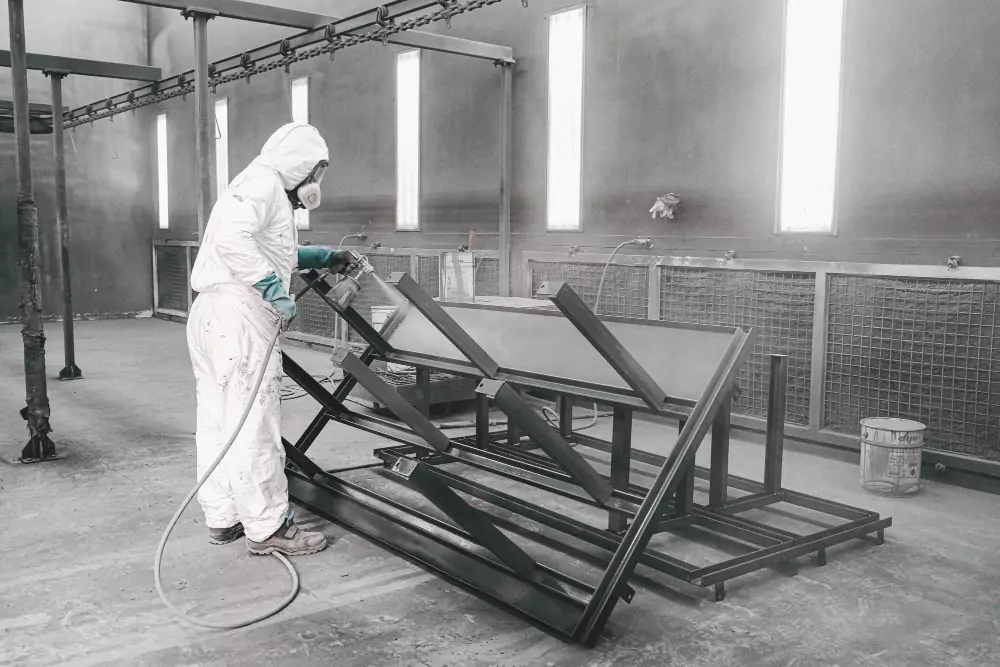
Common Applications of Powder Coating
How Does Powder Coating Compare to Traditional Paint?
Powder coating outperforms traditional paint in durability, efficiency, and environmental safety. It uses a dry coating process and electrostatic spray deposition (ESD) to apply polymer-based powder, which is then hardened through powder curing. In contrast, traditional paint is solvent-based, prone to VOC emissions, and less durable.
Powder Coating vs Traditional Paint
Attribute | Powder Coating | Traditional Paint |
Definition | Dry coating applied via ESD and cured thermally | Liquid paint applied by brush, roller, or spray |
Durability | High scratch, chip, and corrosion resistance | Moderate; prone to peeling and fading |
Application Process | Electrostatic spray + powder curing in an oven | Manual/automatic spray or brush, air-dried |
Materials | Thermoset or thermoplastic powder coating materials | Solvent-based liquid formulations |
Surface Preparation | Requires abrasive or chemical treatment | Requires cleaning and priming |
Environmental Impact | Low VOCs, overspray recyclable, eco-friendly dry coating process | High VOCs, wasteful, harmful to air and water |
Cost-Effectiveness | Higher initial cost, lower lifecycle cost | Cheaper upfront, but higher maintenance costs |
Finish Quality | Uniform, thick coatings with smooth appearance | May require multiple coats; risk of drips and uneven texture |
Industrial Suitability | Widely used in industrial coatings, automotive, and architecture | Common in low-budget or decorative work |
The powder coating process is particularly suited to industrial uses where performance, aesthetics, and sustainability matter. It supports high-efficiency workflows and offers long-term cost benefits compared to traditional paint.
Is Powder Coating the Right Choice for Your Project?
Powder coating is ideal for projects demanding high durability, corrosion resistance, and low maintenance. It suits industrial coatings for metals like steel or aluminium, using a dry coating process applied via electrostatic spray deposition (ESD). The powder coating process includes surface preparation, application, and powder curing in high-heat ovens.
Ideal scenarios for powder coating:
- Outdoor metal fixtures (e.g. fencing, automotive wheels)
- Industrial equipment needs robust protection
- Applications requiring long-term colour and gloss retention
Material limitations to consider:
- Heat-sensitive substrates like plastics or rubber may deform during powder curing
- Thermoset vs thermoplastic choice impacts chemical resistance and finish
- Not suitable where thin or touch-up-friendly coatings are needed
Ensure materials can withstand high temperatures and support proper surface preparation to benefit from this advanced coating system.
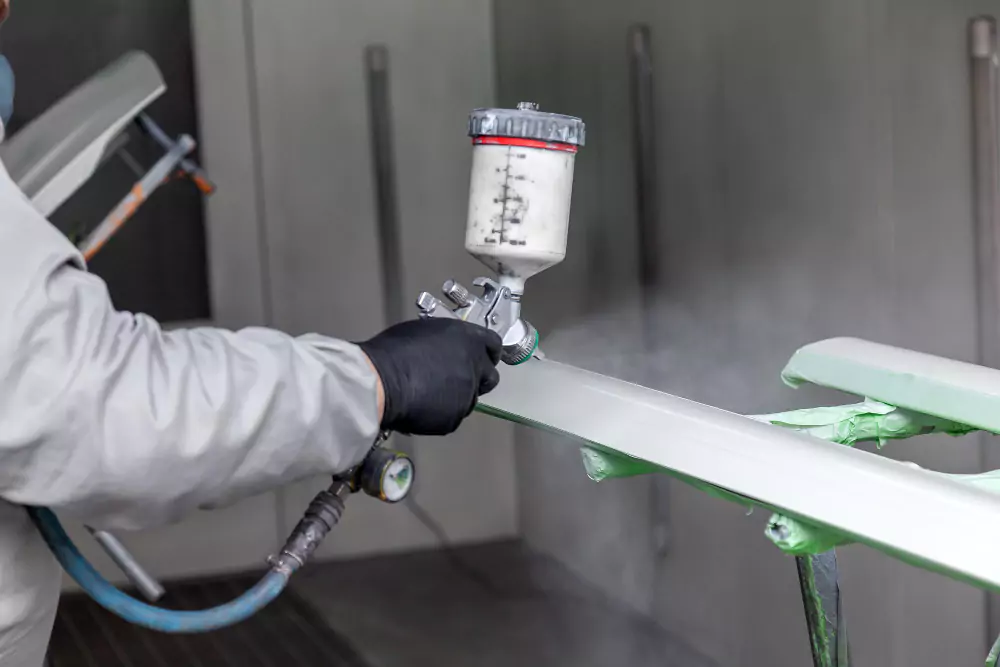
Powder Coating for Your Project