Table of Contents
- 1. How Much Does Powder Coating Cost?
- 2. What Are the Material Costs for Powder Coating?
- 3. How Much Does Surface Preparation Cost for Powder Coating?
- 4. What Are the Labour and Equipment Costs in Powder Coating?
- 5. How Do Thickness and Finish Complexity Affect Powder Coating Costs?
- 6. How Do Volume and Job Size Influence Powder Coating Pricing?
- 7. What Other Factors Affect Powder Coating Costs?
How Much Does Powder Coating Cost?
Powder coating prices usually sit between £20 and £80 per square metre. The exact cost depends on several elements tied to materials, preparation, and job complexity.
Powder Type Matters
Standard powder coatings often range from £20 to £40 per m². These suit most applications, offering solid protection and durability. For more decorative or technical finishes, like metallic, textured, or glitter effects, costs rise to £40–£80 per m² due to pricier materials and extra processing.
Primer Coating Choices
Primers boost adhesion and extend lifespan. A standard primer usually adds £20–£50 per m². Zinc primers, used in harsher environments for superior corrosion resistance, cost £40–£60 per m². These are common for outdoor or industrial steel structures.
Size and Shape Impact Costs
Larger items or complex shapes demand more powder, setup time, and skilled labour. Curved surfaces or intricate details slow down the application, increasing cost.
Thickness Also Counts
Thicker coatings deliver better protection but consume more material. Extra thickness directly raises the price due to higher powder consumption.
Batch Size Influences Pricing
High-volume orders reduce costs thanks to setup efficiency. Small or one-off jobs usually carry higher rates to cover setup and labour.
Other Coating Options
Wet spray painting costs between £60 and £90 per m². Though more flexible in finish, it involves solvents and longer curing, raising the price.
What Are the Material Costs for Powder Coating?
Powder coating material costs usually range from £6 to £16 per pound. The total material expense depends on powder type, finish, durability, and order volume. On average, one pound of powder covers 2 to 3 square metres.
Breakdown of Powder Coating Material Costs
Attribute | Standard Powder | Specialty Powder |
Price per Pound | £6 – £10 | £12 – £16 |
Common Finishes | Gloss, Matte, Satin | Metallic, Chrome, Pearlescent |
Durability Level | Indoor, Light Outdoor Use | High-Temperature, UV, Chemical |
Coverage | 2 – 3 m² per pound | 2 – 3 m² per pound |
Use Case | Furniture, Appliances, Fencing | Automotive, Marine, Industrial |
- Finish and Appearance: Standard finishes (gloss, matte) remain cost-effective. Special effects like chrome or metallic finishes raise prices due to complex production.
- Durability Requirements: High-durability powders contain premium resins and additives for extreme environments, increasing material cost.
- Application Efficiency: Spray transfer efficiency typically falls between 60% and 70%. Losses from overspray and equipment affect actual consumption.
- Order Volume: Bulk purchases lower costs through scale economies. Custom colours in small batches incur higher unit prices.
How Much Does Surface Preparation Cost for Powder Coating?
Surface preparation is a critical stage in powder coating. Its costs depend on project size, equipment, labour, and operational needs.
- Initial Equipment Investment
Purchasing preparation equipment, such as sandblasters, degreasers, and drying systems, typically costs between £1,500 and £12,000. The price varies based on equipment capacity, automation level, and technology.
- Ongoing Consumables and Maintenance
Annual expenses for consumables like blasting media, cleaning agents, filters, and replacement parts range from £1,500 to £4,000. Regular maintenance ensures consistent surface quality and prolongs equipment life.
- Utility and Ventilation Costs
Surface preparation processes consume electricity, water, and compressed air. Monthly utility expenses generally fall between £400 and £1,200, depending on facility size and equipment usage. Ventilation and dust extraction systems add to operating costs but maintain worker safety and environmental compliance.
- Labour Costs
Skilled operators handle surface cleaning, blasting, and inspection. Labour expenses vary by region but represent a significant portion of preparation costs, especially for complex geometries or sensitive substrates.
Summary Table of Surface Preparation Costs
Expense Category | Cost Range |
Initial Equipment | £1,500 – £12,000 |
Annual Consumables | £1,500 – £4,000 |
Monthly Utilities | £400 – £1,200 |
Labour (Variable) | Depends on complexity |

Cost of Preparing Surfaces for Powder Coating
What Are the Labour and Equipment Costs in Powder Coating?
Labour and equipment costs form a significant part of powder coating pricing. Both depend on job complexity, powder type, and finish requirements.
Labour Costs
Labour covers multiple stages:
- Preparation: Cleaning, sanding, masking, and surface treatment like sandblasting or shot blasting.
- Application: Powder application and oven curing.
- Finishing: Polishing, buffing, or applying additional topcoats where needed.
Skilled powder coating technicians in the UK earn between £14 and £20 per hour. Highly specialised or regionally scarce skills may command higher rates. Complex shapes or intricate parts require more time, increasing total labour hours and per-unit costs.
Equipment Costs
Powder coating equipment involves a substantial upfront investment:
- Powder Coating Booths: Provide controlled environments with proper ventilation and safety features. Prices range from £2,000 to £15,000 based on size and features.
- Ovens: Essential for curing; costs range between £3,000 and £20,000 depending on capacity and energy source.
- Additional Machinery: Includes sandblasters, shot blasters, masking tools, and specialised handling equipment. Combined, these can add £1,000 to £10,000.
Ongoing Utility Costs
Operating the booth, oven, and supporting machinery consumes electricity and gas. Monthly utility expenses generally range from £400 to £1,200, depending on facility size and usage.
Summary Table of Labour and Equipment Costs
Category | Cost Range |
Labour (Hourly) | £14 – £20 |
Powder Booth | £2,000 – £15,000 |
Curing Oven | £3,000 – £20,000 |
Additional Machinery | £1,000 – £10,000 |
Utilities (Monthly) | £400 – £1,200 |
How Do Thickness and Finish Complexity Affect Powder Coating Costs?
Coating thickness directly affects both the performance and appearance of powder-coated surfaces. Most powder coatings are applied within a range of 20 to 100 microns (1 to 4 mils), depending on the application requirements.
Thickness Influences Durability
Thicker coatings offer improved resistance to corrosion, abrasion, and UV exposure. Industrial and outdoor components often require coatings of 80–100 microns for long-term protection. Thinner layers, around 20–40 microns, suit indoor or decorative applications where mechanical stress is minimal.
Finish Complexity Raises Costs
Achieving a smooth, uniform coating on simple flat surfaces is straightforward. However, complex geometries, such as corners, recesses, and intricate designs, pose challenges. Uneven powder distribution can lead to thin spots or excessive buildup, affecting both durability and appearance.
Application Technique is Critical
Professional application ensures even coverage and optimal film build. Skilled technicians adjust electrostatic settings, gun distance, and spray patterns to accommodate shape complexity and achieve a high-quality finish.
Material Usage Increases with Complexity
Irregular shapes may require additional powder to maintain consistent thickness across the surface, leading to higher material consumption and increased overall costs.
How Do Volume and Job Size Influence Powder Coating Pricing?
The size and volume of a powder coating job directly affect pricing. Larger batches benefit from operational efficiencies, while smaller jobs often carry higher per-unit costs.
Key Cost Factors by Job Volume and Size
Factor | Small Batch (e.g. 1 item) | Large Batch (e.g. 50 items) |
Unit Cost | £60 per item | £30–£35 per item |
Setup Time | High (spread over 1 item) | Low (spread over 50 items) |
Material Wastage | Higher | Lower |
Labour Efficiency | Lower | Higher |
Equipment Usage | Less efficient | Fully utilised |
- Batch Size Efficiency: Large production runs allow better use of powder, labour, and equipment. Setup costs like calibration, powder loading, and masking spread across multiple items lower unit costs.
- Surface Area Impact: Larger items consume more powder and require longer application times. Industrial machinery needs more resources than small components like frames or panels.
- Shape Complexity: Intricate designs or parts with tight tolerances demand additional preparation, precise application, and specialised fixtures, increasing labour time and total cost.
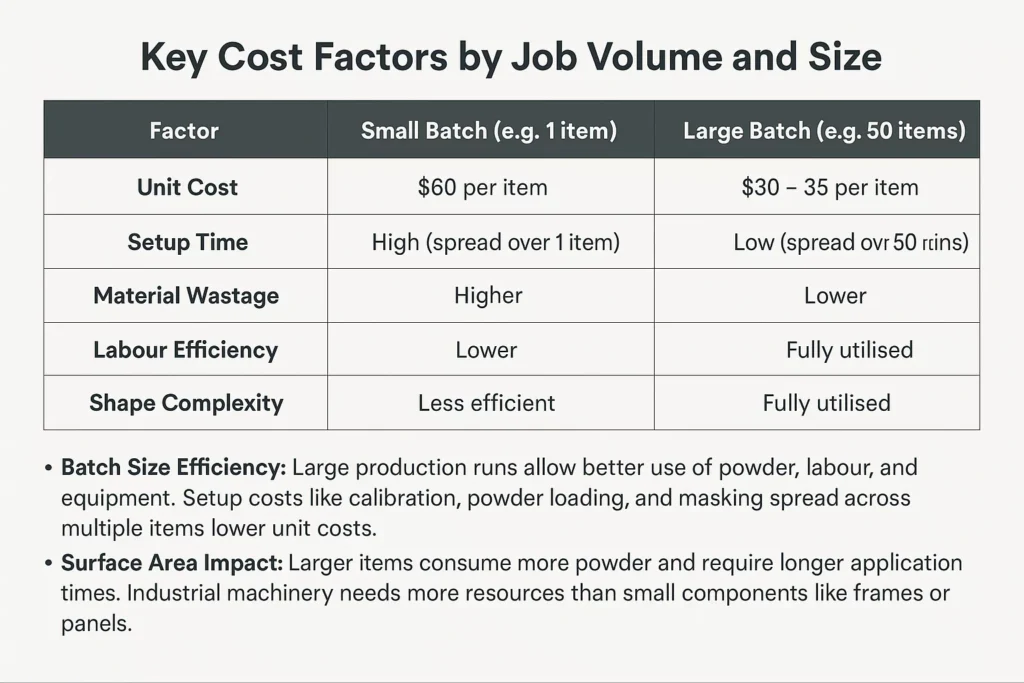
Powder Coating Cost Variations by Volume and Job Size
What Other Factors Affect Powder Coating Costs?
Several secondary factors can increase powder coating costs, depending on job requirements and operational conditions.
Breakdown of Additional Cost Factors
Factor | Description | Cost Impact |
Powder Type | Special finishes (metallic, textured, heat-resistant) | Higher |
Primers | Zinc or epoxy primers for adhesion and corrosion protection | Higher |
Job Complexity | Intricate shapes, masking, and tight tolerances | Higher |
Equipment Overhead | Depreciation, maintenance, utilities, and ventilation | Ongoing |
Environmental Compliance | Filtration, waste handling, and safety regulations | Added Cost |
Logistics | Transport, packaging, and handling of large or fragile items | Added Cost |
- Powder and Finish Complexity: Advanced powder types increase material costs. Complex finishes require extra skill and additional coating steps.
- Pre-Treatment and Priming: Primers add material and labour expenses but enhance coating durability, especially for harsh environments.
- Facility and Compliance Costs: Equipment upkeep, energy use, and environmental regulations contribute to indirect operating costs.
- Transport and Handling: Special handling for large or delicate parts increases logistics expenses.