Table of Contents
- 1. Introduction to Electric Gate Types
- 2. What Are Swing Electric Gates and How Do They Work?
- 3. When Should You Use Sliding Electric Gates?
- 4. Why Are Bi-Folding Electric Gates Ideal for High-Security and Fast Access?
- 5. How Do Cantilever Electric Gates Operate Without Ground Tracks?
- 6. What Are Telescopic Electric Gates and Where Are They Most Effective?
- 7. How Do Vertical Pivot Electric Gates Save Space?
- 8. How Can You Choose the Best Electric Gate Type for Your Property?
- 9. What Materials Are Commonly Used in Electric Gates?
- 10. How Much Do Different Types of Electric Gates Cost?
- 11. Frequently Asked Questions
Introduction to Electric Gate Types
Electric gates exist in various types, each suited to specific site conditions and operational needs. The primary categories include swing gates, sliding gates, and bi-folding speed gates. Each system combines different materials, mechanisms, and safety features to match the environment and security requirements.
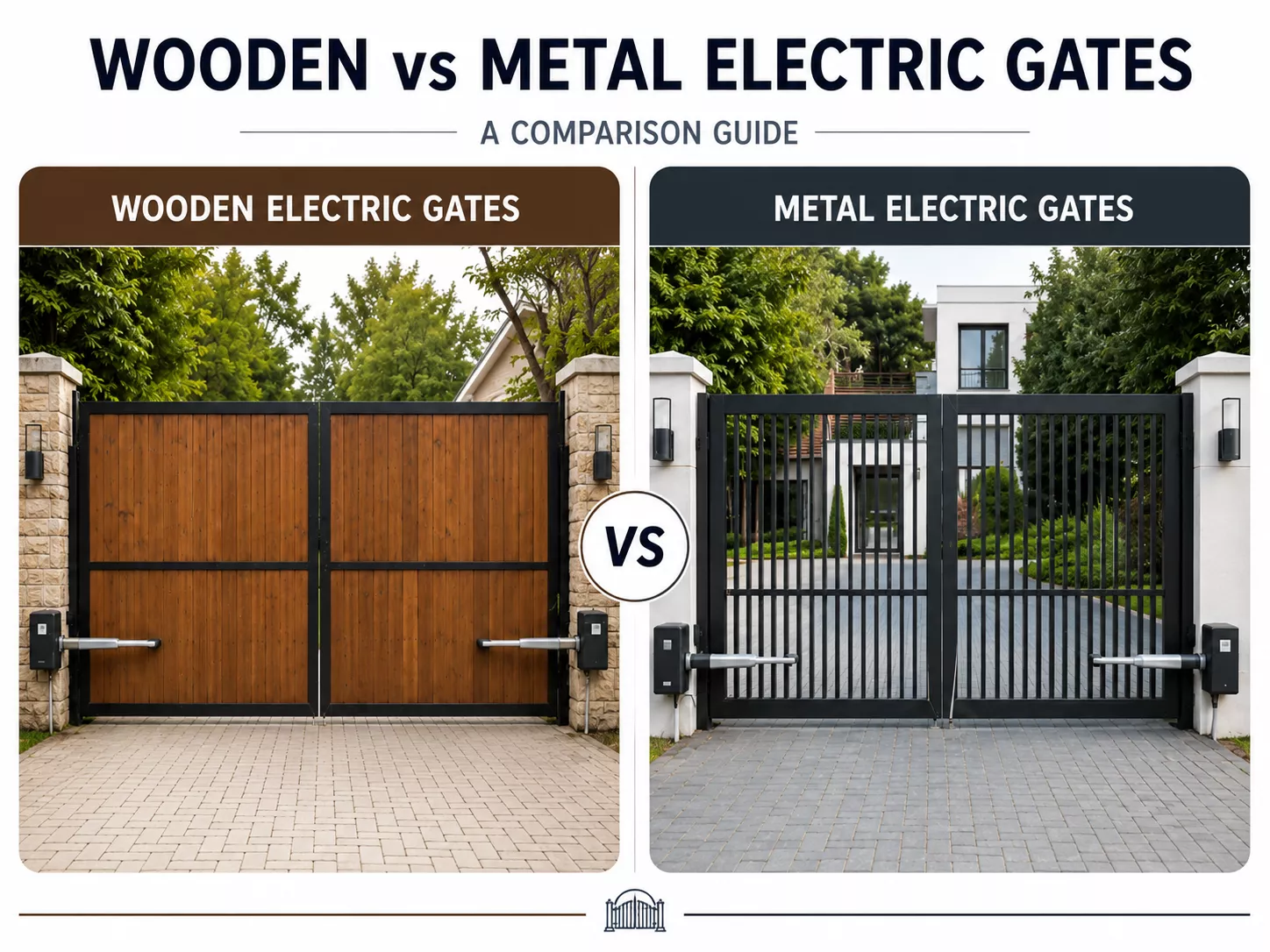
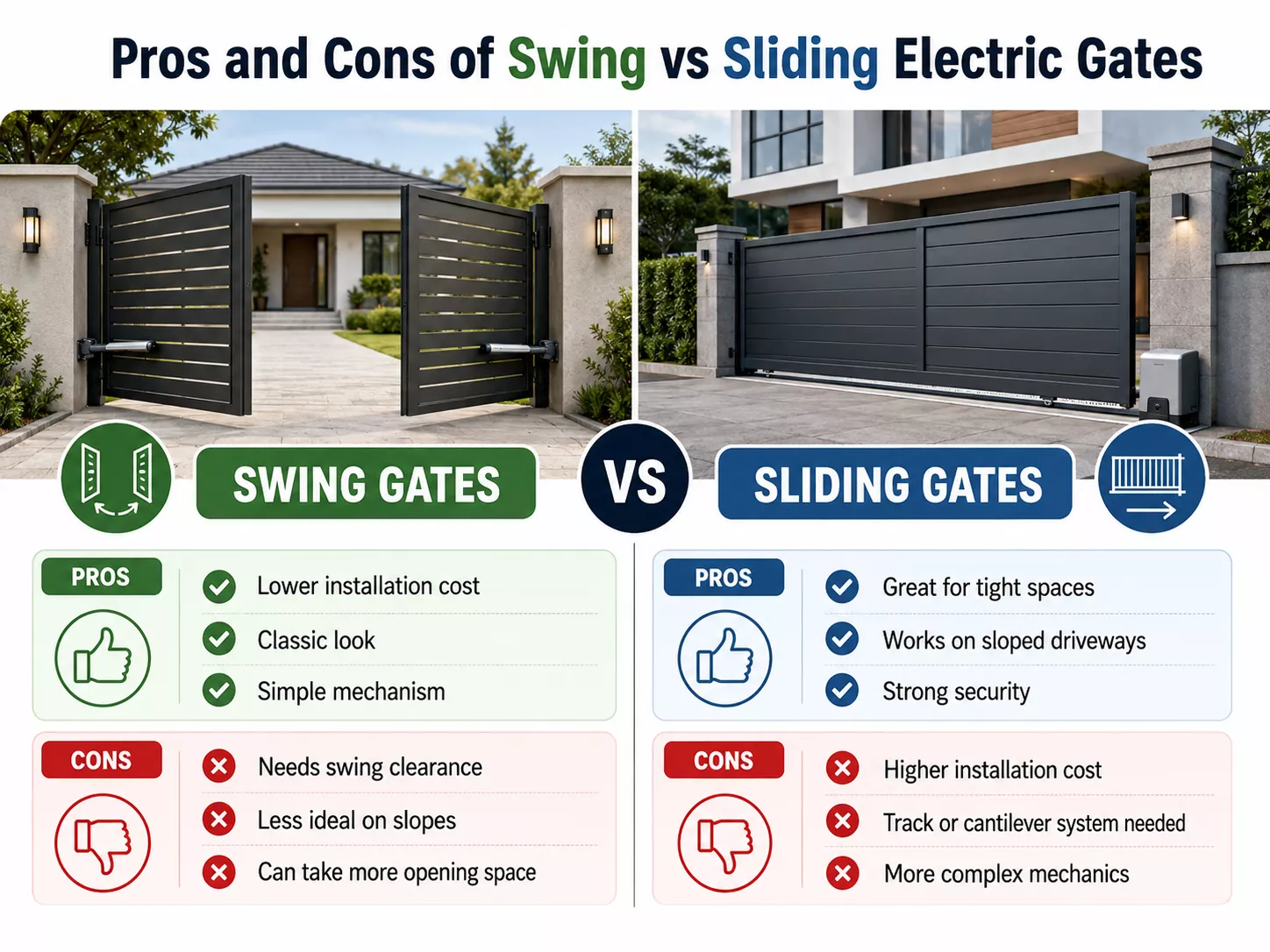
Swing gates operate by rotating on hinges, either inward or outward. They remain the most common option where ground space is ample. Available in single or double leaf designs, they can incorporate diverse infills such as timber, steel, welded mesh, vertical bar, ornamental panels, and acoustic materials. Their simplicity makes them cost-effective, but they require flat terrain and unobstructed swing paths.
Sliding gates move horizontally, making them ideal for sites with limited depth or sloping ground where swing gates cannot function. There are two key subtypes:
- Cantilever sliding gates remain elevated, supported by rollers on posts with tubular tracks integrated into the gate’s base. They are quieter, require less maintenance, and perform reliably in snowy conditions.
- Tracked sliding gates run on ground tracks and offer robust security. They demand well-maintained, even surfaces, but provide strong mechanical simplicity and resistance to forced entry.
Bi-folding speed gates offer rapid access control, folding back on themselves via hydraulic rams. Opening at speeds of up to 1 metre per second, they suit high-security sites like data centres, fire stations, and utilities. These gates feature trackless designs, minimising height restrictions and maintenance.
All electric gates are classified as machinery under safety regulations. Improper design, installation, or maintenance can lead to serious injury. Certified professionals must ensure compliance with applicable safety standards to guarantee operational safety.
What Are Swing Electric Gates and How Do They Work?
Swing electric gates deliver security, durability, and aesthetic appeal, making them ideal for residential and rural properties. They operate by rotating on hinges, requiring sufficient space for inward or outward movement.
- Enhanced Security
- Rural crime averages £5,100 per incident (NFU data).
- Solid gates deter unauthorised access and reduce emotional stress caused by theft.
- Durable Construction
- Equipped with FAAC underground motors (IP67-rated) for water resistance and long service life.
- Concealed motors maintain visual appeal.
- Maglocks stabilise both gate leaves against wind and forced entry.
- Comprehensive Safety Features
- Obstacle detection halts gate movement when blocked.
- Safety photocells use infrared beams to stop operation when vehicles or pedestrians interrupt.
- Complies with UK Health & Safety and Machinery Directive standards.
- Flexible Access Control
- GSM controllers allow smartphone management.
- Keypads and raised posts serve larger vehicles.
- GSM intercoms enable remote visitor communication.
- Radio fobs offer convenient, wireless operation.
- Energy-Efficient Options
- Solar panels combined with deep-cycle batteries power gates off-grid.
- Systems store multiple days of energy, adapting to seasonal changes.
When Should You Use Sliding Electric Gates?
Sliding electric gates provide a space-saving solution where swing gates are impractical. They operate horizontally, making them ideal for sites with sloping ground, limited depth, or high-security needs.
- Two Sliding Mechanisms
- Cantilever sliding gates:
- Elevated above ground.
- Supported by post-mounted rollers and tubular tracks.
- Perform reliably in snow and require minimal maintenance.
- Operate quietly without ground tracks.
- Tracked sliding gates:
- Run on fixed ground tracks using wheels.
- Mechanically simple, but needs even surfaces.
- Offer strong resistance against forced entry.
- Cantilever sliding gates:
- Material and Design Options
- Available in steel, timber, welded mesh, vertical bar, ornamental panels, and acoustic infills.
- Custom designs ensure compatibility with site aesthetics and security requirements.
- Security and Durability
- Strong construction deters intrusion attempts.
- Less vulnerable to wind due to horizontal movement.
- Minimal moving parts reduce long-term wear.
- Access and Safety Features
- Compatible with GSM controllers, keypads, radio fobs, and intercoms.
- Integrated photocells and obstacle detection enhance operational safety.
Why Are Bi-Folding Electric Gates Ideal for High-Security and Fast Access?
Bi-folding electric gates offer rapid access control, making them ideal for high-security and fast-paced environments. Each gate leaf folds back on itself, reducing the space needed for operation while maintaining robust security.
- Fast Operation
- Operate at speeds up to 1 metre per second.
- Suitable for fire stations, hospitals, data centres, and utility sites where quick entry and exit are critical.
- Heavy-duty hydraulic rams ensure smooth and reliable movement.
- Space Efficiency
- Trackless design eliminates ground tracks, avoiding height restrictions and reducing installation complexity.
- Operates efficiently in areas with limited clearance or confined spaces.
- High-Security Features
- Available with PAS 68 crash ratings for vehicle impact resistance.
- Constructed using vertical bar, Securi-Mesh®, or sheeted infills, with custom options for enhanced protection.
- Safety and Compliance
- Equipped with obstacle detection, photocells, and emergency stop features.
- Compliant with UK Health & Safety and Machinery Directive standards.
- Access Control Options
Integrated with GSM controllers, keypads, radio fobs, and intercom systems for flexible, secure management.
How Do Cantilever Electric Gates Operate Without Ground Tracks?
Cantilever electric gates provide reliable operation where traditional ground tracks are impractical. They operate by sliding horizontally, fully suspended above the ground, eliminating the need for a track across the opening.
- Trackless Operation
- Gates are supported by post-mounted rollers and a tubular lower track integrated into the gate frame.
- Suitable for uneven, sloped, or snowy terrain where tracked systems would fail.
- Operate smoothly without obstructions caused by debris or ice accumulation.
- Durability and Low Maintenance
- Fewer ground-level components reduce wear and maintenance demands.
- Elevated design prevents corrosion and mechanical damage from surface contaminants.
- Strong Security Performance
- Horizontal movement resists wind pressure, offering greater stability than swinging alternatives.
- Difficult to force open due to robust structural design.
- Flexible Design Options
- Manufactured with various infills: steel, timber, welded mesh, ornamental bars, and acoustic panels.
- Customisation is available to match architectural aesthetics and specific security needs.
- Integrated Safety and Access Control
- Equipped with photocells, obstacle detection systems, GSM controllers, keypads, radio fobs, and intercom units.
- Fully compliant with UK safety regulations and Machinery Directive standards.
What Are Telescopic Electric Gates and Where Are They Most Effective?
Telescopic electric gates offer an innovative solution for sites with limited side space but where a wide opening is still required. These gates use multiple panels that slide in sequence, overlapping as they open to maximise space efficiency.
- Space-Optimising Mechanism
- Panels move along separate tracks, allowing wide openings in confined spaces.
- Ideal for commercial premises, residential driveways, and industrial sites where lateral space is restricted.
- Fast and Smooth Operation
- Sequential sliding ensures quicker opening and closing times compared to single-panel sliding gates.
- Synchronised motor systems provide smooth, controlled movement.
- Enhanced Security and Strength
- Constructed with durable materials such as steel, welded mesh, timber infills, and ornamental bars.
- Robust frame design resists forced entry and withstands environmental stresses.
- Low Ground Impact
- Operate on precise ground tracks with minimal maintenance needs.
- Tracks must remain clear of debris for optimal performance.
- Comprehensive Safety Systems
- Fitted with photocells, obstacle detection, GSM controllers, keypads, radio fobs, and intercom access systems.
- Fully compliant with UK Health & Safety regulations and the Machinery Directive.

Where Telescopic Electric Gates Work Best
How Do Vertical Pivot Electric Gates Save Space?
Vertical pivot electric gates provide a compact, efficient solution for sites with limited horizontal space. Unlike sliding or swinging gates, these gates rotate vertically around a central pivot point, lifting the gate panel upward to allow access.
- Space-Saving Design
- Requires minimal ground space for operation.
- Ideal for urban sites, narrow entrances, or locations with limited side clearance.
- Frees up the full width of the driveway for unobstructed vehicle access.
- Rapid Operation
- Lifts quickly and smoothly, reducing waiting times for vehicles.
- Suitable for emergency services, car parks, and commercial facilities where fast entry is essential.
- Robust Security Features
- Built from strong materials such as steel, aluminium, vertical bars, or solid panels.
- Resistant to forced entry and adverse weather conditions.
- Reliable Performance
- Minimal moving parts reduce maintenance requirements.
- Operates effectively in snow, ice, or uneven ground conditions.
- Integrated Safety and Control Systems
- Equipped with obstacle detection, photocells, GSM controllers, keypads, radio fobs, and intercom systems.
- Fully compliant with UK Health & Safety regulations and Machinery Directive standards.
How Can You Choose the Best Electric Gate Type for Your Property?
Selecting the correct electric gate depends on space, security, speed, aesthetics, and power options. The table below outlines the key factors to consider:
Criteria | Swing Gates | Sliding Gates (Tracked/Cantilever) | Telescopic Gates | Bi-Folding Gates | Vertical Pivot Gates |
Space | Requires full swing area | Ideal for narrow or sloped driveways | Maximises wide openings in limited side space | Minimal depth needed | Minimal horizontal clearance |
Security | Moderate with maglock options | High resistance to forced entry | Strong overlapping panels | PAS 68 crash-rated available | High strength construction |
Speed | Moderate opening speed | Moderate (depending on mechanism) | Faster than standard sliding gates | Up to 1 metre/second | Rapid vertical movement |
Aesthetics | Wide range of custom infills | Timber, steel, mesh, ornamental, acoustic | Customisable finishes | Sleek, modern appearance | Clean, vertical movement |
Power & Access | GSM controllers, keypads, solar | GSM, keypads, intercoms, solar power | GSM, fobs, intercoms | GSM, radio fobs, keypads | GSM, intercom, keypads |
Maintenance | Low to moderate | Cantilever: low, Tracked: regular | Moderate (track cleaning) | Low, fewer ground components | Low maintenance needs |
By analysing these factors, property owners can choose a gate that balances functionality, security, and appearance while ensuring reliable performance.
What Materials Are Commonly Used in Electric Gates?
The material choice for electric gates influences their strength, security, aesthetics, and maintenance. Below is a comparison of the common materials:
Material | Key Properties | Best Applications | Advantages | Considerations |
Steel | High strength, impact-resistant | Commercial, industrial, high-security sites | Robust security, multiple design options (welded mesh, vertical bars, solid panels), long lifespan with galvanising or powder coating | Heavier, requires strong motors, potential corrosion without proper coating |
Aluminium | Lightweight, corrosion-resistant | Bi-folding, sliding, vertical pivot gates, coastal or damp environments | Low maintenance, fast operation, extensive colour options with powder coating | Less impact-resistant than steel |
Wood | Natural, traditional appearance | Residential, rural, heritage properties | Warm aesthetics, multiple timber types (hardwood, softwood, composites), customisable designs | Requires regular maintenance to prevent rot and weathering |
Iron | Ornamental, decorative | Heritage, prestige entrances | High visual impact, intricate designs possible | Heavy, prone to rust, needs frequent maintenance |
Choosing the correct material ensures the electric gate matches both functional needs and site aesthetics while minimising maintenance.
How Much Do Different Types of Electric Gates Cost?
The cost of electric gates depends on several factors, including gate type, materials, automation systems, safety features, and site-specific installation requirements. Below is a general cost comparison for different electric gate types:
Gate Type | Typical Cost Range (GBP) | Key Cost Influencers |
Single Swing Gate | £5,000 – £7,000 | Simpler mechanism, fewer components, size, material choice |
Double Swing Gate | £8,000 – £14,000+ | Dual leaf structure, increased motor capacity, larger materials, advanced access control |
Sliding Gate (Tracked or Cantilever) | £5,000 – £9,200+ | Track or cantilever system complexity, structural support, ground preparation, automation level |
Bi-Folding Gate | From £5,000 upwards | Hydraulic systems, fast operation, compact design, additional safety devices |
Telescopic Gate | £6,000 – £10,000+ | Multi-panel coordination, track alignment, synchronised motors |
Vertical Pivot Gate | £7,000 – £12,000+ | Specialised pivot mechanisms, vertical lifting motors, reinforced structure |
Additional costs may include access control systems (GSM controllers, keypads, intercoms), safety devices (photocells, obstacle detection), and custom finishes like RAL powder coatings or timber infills. Installation complexity, groundworks, and site preparation can also significantly affect final pricing.
Frequently Asked Questions
Swing gates, sliding gates (tracked and cantilever), bi-folding gates, telescopic gates, and vertical pivot gates.
The best type depends on site needs: swing gates for open spaces, sliding gates for narrow or sloped areas, and bi-folding or vertical pivot gates for fast, space-saving access.
There are five main types: swing, sliding, bi-folding, telescopic, and vertical pivot gates, each offering various security levels.
Underground motors, above-ground ram arms, cantilever systems, hydraulic operators, and vertical pivot mechanisms.